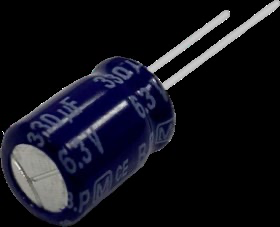
5.0 6.3 8.0 10.0 12.5 16.0 18.0 ød 0.5 0.5 0.6 0.6 0.6 0.8 0.8 F 2.0 2.5 3.5 5.0 5.0 7.5 7.5 Design and specifications are each subject to change without notice. Ask factory for the current technical specifications before purchase and/or use. Should a safety concern arise regarding this product, please be sure to contact us immediately. 01-Sep-25
SU-A (Bi-polar) series Explanation of part numbers ◇ Part number system ECEA
*1: Ripple current (120 Hz / +85 °C) *2: tan δ (120 Hz / +20 °C) ・ When requesting taped product, please put the letter “B” or “i” between the "( )".
Lead wire pitch ✽B=5 mm, 7.5 mm, i=2.5 mm. ・ Please refer to the page of “Taping dimensions”.
Design and specifications are each subject to change without notice. Ask factory for the current technical specifications before purchase and/or use. Should a safety concern arise regarding this product, please be sure to contact us immediately. 01-Sep-25
SU-A (Bi-polar) series Characteristics list
Endurance : 85 °C 2000 h (1000 h for each polarity)
*1: Ripple current (120 Hz / +85 °C) *2: tan δ (120 Hz / +20 °C) ・ When requesting taped product, please put the letter “B” or “i” between the "( )".
Lead wire pitch ✽B=5 mm, 7.5 mm, i=2.5 mm. ・ Please refer to the page of “Taping dimensions”.
Design and specifications are each subject to change without notice. Ask factory for the current technical specifications before purchase and/or use. Should a safety concern arise regarding this product, please be sure to contact us immediately. 01-Sep-25 Safety and Legal Matters to Be Observed
Safety and Legal Matters to Be Observed
Product specifications and applications
■ Please be advised that this product and product specifications are subject to change without notice for improvement purposes. Therefore, please request and confirm the latest delivery specifications that explain
the specifications in detail before the final design, or purchase or use of the product, regardless of the application. In addition, do not use this product in any way that deviates from the contents of the company's delivery specifications. ■ Unless otherwise specified in this catalog or the product specifications, this product is intended for use in general electronic equipment (AV products, home appliances, commercial equipment, office equipment,
information and communication equipment, etc.). When this product is used for the following special cases, the specification document suited to each application shall be signed/sealed (with Panasonic Industry and the user) in advance..These include applications requiring special quality and reliability, wherein their failures or malfunctions may directly threaten human life or cause harm to the human body (e.g.: space/aircraft equipment, transportation/traffic equipment, combustion equipment, medical equipment, disaster prevention/crime prevention equipment, safety equipment, etc.).
Safety design and product evaluation
■ Please ensure safety through protection circuits, redundant circuits, etc., in the customer's system design so that a defect in our company's product will not endanger human life or cause other serious damage. ■ This catalog shows the quality and performance of individual parts. The durability of parts varies depending on the usage environment and conditions. Therefore, please ensure to evaluate and confirm the state of each part
after it has been mounted in your product in the actual operating environment before use. If you have any doubts about the safety of this product, then please notify us immediately, and be sure to conduct a technical review including the above protection circuits and redundant circuits at your company.
Laws / Regulations / Intellectual property
■ The transportation of dangerous goods as designated by UN numbers, UN classifications, etc., does not apply to this product. In addition, when exporting products, product specifications, and technical information described
in this catalog, please comply with the laws and regulations of the countries to which the products are exported, especially those concerning security export control. ■ Each model of this product complies with the RoHS Directive (Restriction of the use of hazardous substances in electrical and electronic equipment) (2011/65/EU and (EU) 2015/863). The date of compliance with the RoHS
Directive and REACH Regulation varies depending on the product model. Further, if you are using product models in stock and are not sure whether or not they comply with the RoHS Directive or REACH Regulation, please contact us by selecting "Sales Inquiry" from the inquiry form. ■ During the manufacturing process of this product and any of its components and materials to be used, Panasonic Industry does not intentionally use ozone-depleting substances stipulated in the Montreal Protocol
and specific bromine-based flame retardants such as PBBs (Poly-Brominated Biphenyls) / PBDEs (Poly-Brominated Diphenyl Ethers). In addition, the materials used in this product are all listed as existing chemical substances based on the Act on the Regulation of Manufacture and Evaluation of Chemical Substances. ■ With regard to the disposal of this product, please confirm the disposal method in each country and region where it is incorporated into your company's product and used. ■ The technical information contained in this catalog is intended to show only typical operation and application circuit examples of this product. This catalog does not guarantee that such information does not infringe upon
the intellectual property rights of Panasonic Industry or any third party, nor imply that the license of such rights has been granted. ■ Design, materials, or process related to technical owned by Panasonic Industry are subject to change without notice.
Panasonic Industry will assume no liability whatsoever if the use of our company's products deviates from the contents of this catalog or does not comply with the precautions. Please be advised of these restrictions.
■ This product (capacitor) is intended for standard general-purpose use in electronic equipment, and is not designed for use in the specific environments described below. Using the product in such specific environments or service conditions,
therefore, may affect the performance of the product. Check with us about the performance and reliability of the product first before using the product.
(1) Used at a temperature higher than the upper limit category temperature or lower than the lower limit category
temperature. (2) Used in an environment where the product is directly exposed to water, salt water, oil, etc., or in a liquid, such as water,
oil, chemicals, and organic solvents. (3) Used in an outdoor environment where the product is exposed to direct sunlight, ozone, radiation, UV-rays, etc., or in
a dusty place. (4) Used in a wet place (dew concentration on a resistor, water leakage, etc.), a place exposed to sea breeze, or a place
filled with a corrosive gas, such as Cl 2 , H 2 S, NH 3 , SO 2 , or NO X . (5) Used in an environment filled with a toxic gas (hydrogen sulfide, sulfurous acid, nitrous acid, chlorine and chlorine
compound, bromine and bromine compound, ammonia, etc.) (6) Used in an environment where static electricity and electromagnetic waves are strong. (7) Located close to heating component or a flammable material, such as a vinyl cable. (8) Sealed with a resin, etc. (9) Cleansed with a solvent, water, or a water-soluble cleaner, to remove solder flux after soldering. (10) Used in an environment where an acidic or alkali atmosphere is present. (11) Used in an environment where excessive vibration or mechanical shocks exceeding a specified range is applied to the
product (even if the applied vibration or mechanical shocks is within the specified range, it may cause the product to resonate, in which a large vibration acceleration may be generated. Make sure to evaluate/check such vibrations or mechanical shocks applied to the product in an actual condition). Panasonic Industry's conditions for vibration test are shown in the table below. Random waveform is not guaranteed. For radial type, datasheet is also available if requested.
Item Waveform Frequency Direction Duration Max p-p amplitube Max acceleration Standard
Sine 10 - 55 Hz X, Y, Z axis 2 hours each direction
1.5mm PP 90 m/s 2 (9.1 G)
Vibration-proof
Sine 5 - 2000 Hz X, Y, Z axis 2 hours each direction
5mm PP 294 m/s 2 (30 G) (12) Used under a low atmospheric pressure condition or depressurized condition. ■ The capacitor withstands an immersion cleaning process where the board carrying the product is immersed in a cleaning solution of 60 °C or lower for less than 5 minutes and withstands an ultrasonic cleaning process as well. However, ensure
to thoroughly rinse and dry it. Some cleaning methods erase or blur notes on the capacitor in some cases. Some types of capacitors are not washable and some cleaning solutions cannot be used to clean a capacitor. The following water-base solvents have been validated for cleaning. Contact a sales representative for more information. Pine Alpha ST-100S, Cleanthrough 750H/750L/710M ■ Keep the cleaning solution under strict contamination control (conductivity, pH, specific gravity, water content, etc.). A contaminated cleaning solution will show a high chlorine concentration, thereby corroding the interior of the capacitor
in some cases. Keep the flux concentration in the cleaning solution at a 2% mass or less. ■ Unless otherwise specified in the specifications, avoid cleaning the capacitor with a halogen-based solvent, an alkaline solvent, a petroleum-based solvent, xylene, or acetone. Using a halogen-based solvent may result in a case where the
solvent infiltrates (leaks) into the capacitor and break-down releasing chlorine, which reacts with aluminum which can corrode the capacitor interior. 1-1-1 trichloroethane is particularly harmful to a capacitor. Never use it to clean a capacitor. A alkaline solvent may corrode (dissolve) an aluminum case, a petroleum-based solvent and xylene may damage the sealing rubber and accelerate its deterioration, and acetone may erase notes on the capacitor. To protect the global environment, refrain from using an ozone depleting substance as the cleaning solution. ■ Right after the board cleaning, subject the capacitor to a forced drying process so that no cleaning solution remains between the sealing part of the capacitor and the printed board.
Set a drying temperature equal to or lower than the upper limit category temperature.
1-Sep-25
1-Sep-25
1-Sep-25
1-Sep-25
Reference information
Guidelines
Some of the product use guidelines described herein are excerpted from JEITA RCR-2367D "Safety application guide for fixed aluminum electrolytic capacitors for use in electronic equipment," a technical report issued by the Japan Electronics and Information Technology Industries Association on October 2017. For more detailed information, please see the above technical report.
Intellectual property
Panasonic Group provides customers with safe products and services. We are also making great efforts to protect our intellectual property rights for Panasonic Group products. Typical patents related to this product are as follows. (Hybrid type)