⬇ Download Markdown · ⬇ Download LaTeX · ⬇ original · view original

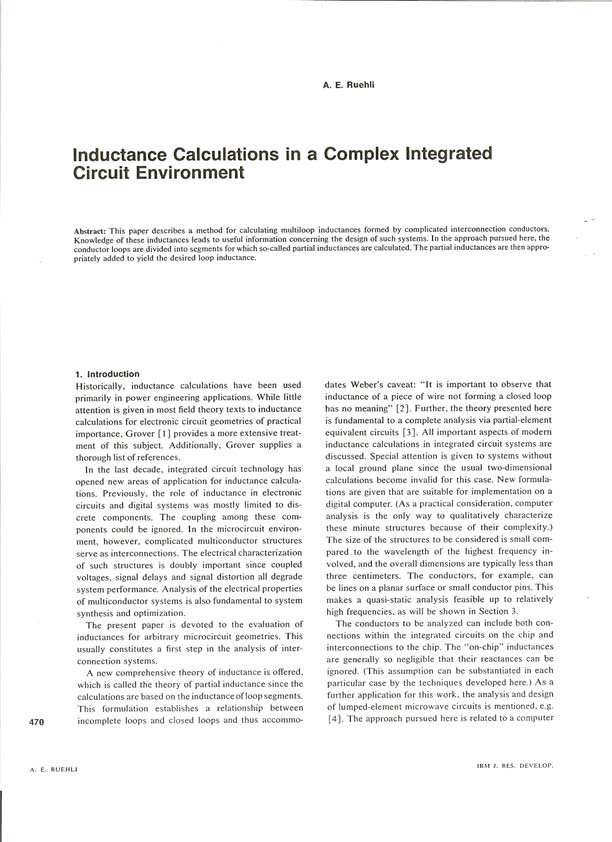
I n 1971, I started by career as an Assistant Professor of Electrical Engineering at the University of Kentucky. I received a manuscript for review from the IBM Journal of Research and Development. I was not familiar with the author, Albert E. Ruehli, who was with the IBM T. J. Watson Research Center at the Yorktown Heights, NY research facility. After reading and studying the manuscript in detail, I strongly recommended that it be published. I was stunned by the enormous insight in Al’s seminal paper! I was not familiar with the main topic of his paper: partial inductance. Although the topic of partial inductance had been the subject of much research in the 1900–1920 times due to the introduction of AC power distribution, the topic had fallen out of usage in the intervening years until the emergence of high-speed digital systems in the 1990’s. Although inductance is funda-
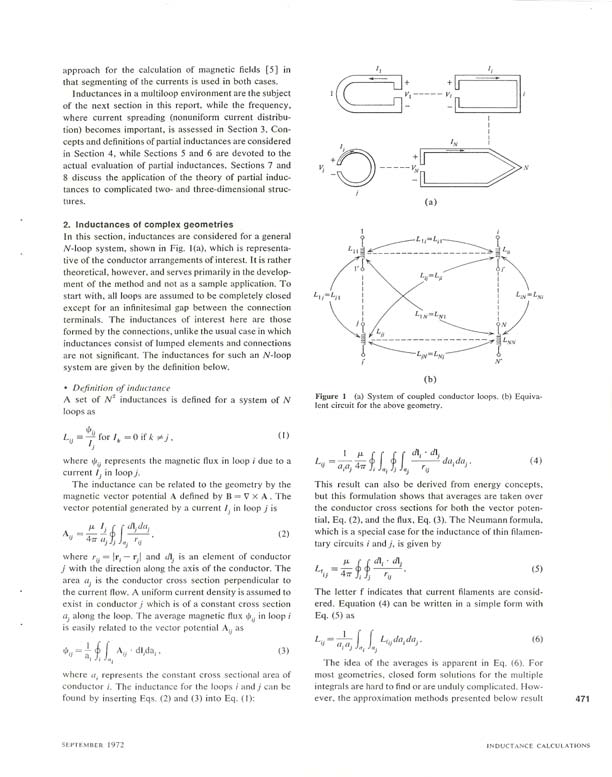
58 mentally related to the inductance of a closed loop of current, I had no idea that an inductance could be uniquely attributed to a section of that loop! Al’s thorough discussion opened a new world to me and showed how we could uniquely determine things such as ground bounce where an inductive voltage could be attributed between two points on a portion of that conductor. This also describes how we can quantify other problems that are plaguing modern high-speed digital systems such as power rail collapse. Loop inductance has nothing to do with solving these problems.
I strongly recommend that this paper be read and studied. I am certain that doing so will have the same impact on how you view how to quantify problems that you didn’t understand as it had on me and will change your success in solving problems that are starting to plague today’s high-speed digital systems.
59
60
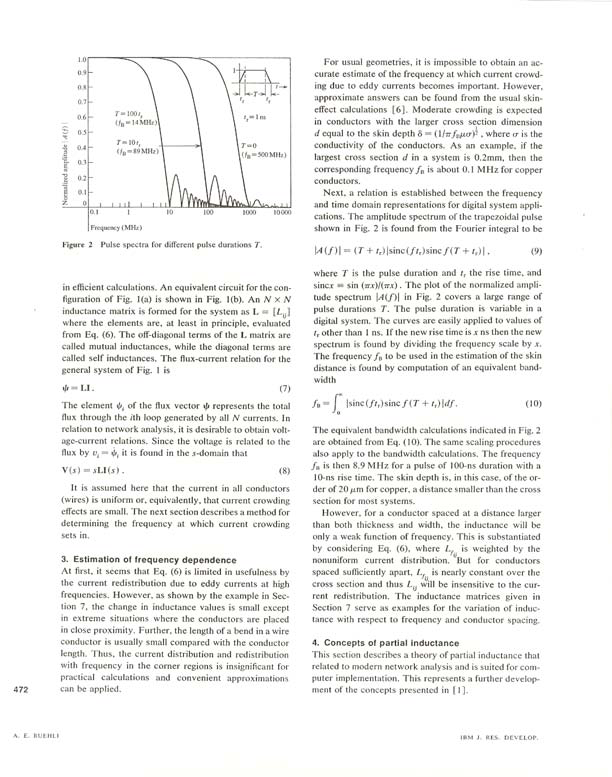
61
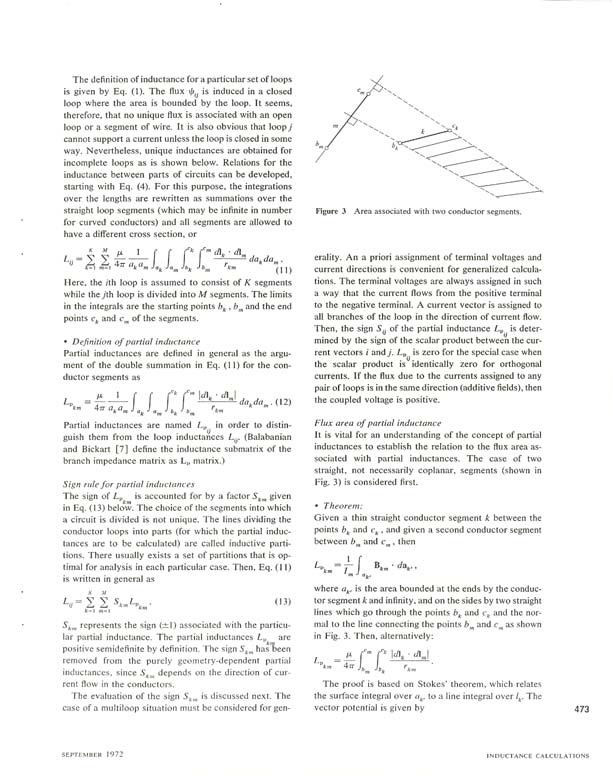
62
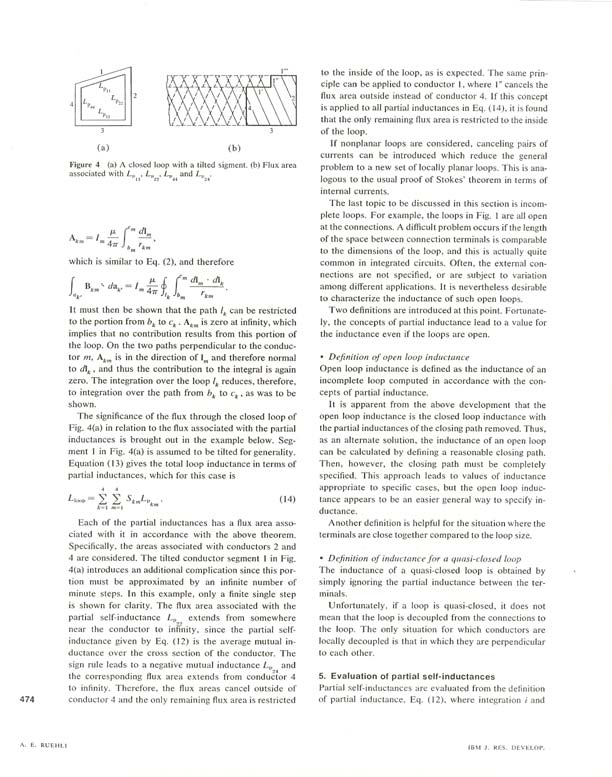
63
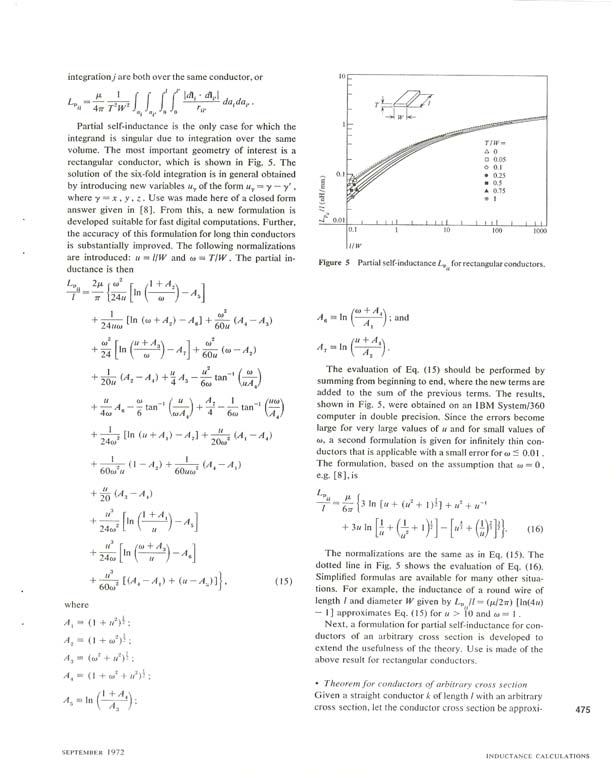
64
65
66
67
68
69
Albert E. Ruehli received his Ph.D. degree in Electrical Engineering in 1972 from the University of Vermont, Burlington, and an honorary doctorate in 2007 from the Lulea

University in Sweden. He has been a member of various projects with IBM including mathematical analysis, semiconductor circuits and devices modeling, and as manager of a VLSI design and CAD group. Since 1972, he has been at IBM’s T.J. Watson Research Center in Yorktown Heights, New York, where he was a Research Staff Member in the Electromagnetic Analysis Group. He is now an Emeritus of IBM Research and an adjunct professor in the EMC area at the Missouri University of Science & Technology. He is the editor of two books, Circuit Analysis, Simulation and Design (New York, North Holland 1986, 1987) and he is an author or coauthor of over 180 technical papers.
Dr. Ruehli has served in numerous capacities for the IEEE. In 1984 and 1985, he was the Technical and General Chairman, respectively, of the ICCD International Conference. He has been a member of the IEEE ADCOM for the Circuit and System Society and an associate editor for the Trans. on Computer-Aided Design. He has given talks at universities including keynote addresses and tutorials at conferences, and has organized many sessions. He received IBM Research Division or IBM Outstanding Contribution Awards in 1975, 1978, 1982, 1995 and 2000. In 1982, he received the Guillemin-Cauer Prize Award for his work on waveform relaxation, and in 1999, he received a Golden Jubilee Medal, both from the IEEE CAS Society. In 2001, he received a Certificate of Achievment from the IEEE EMC Society for inductance concepts and the Partial Element Equivalent Circuit (PEEC) method. He received the 2005 Richard R. Stoddart Award, and in 2007 he received the Honorary Life Member Award from the IEEE Electromagnetic Compatibility Society for outstanding technical performance. He is a life fellow of the IEEE and a member of SIAM.
IBM T. J. Watson Research Center, P. O. Box 218, Yorktown Heigts, NY 10598, Tel: 914 945 1592 Fax: 914 945 4469 EMC