
⬇ Download Markdown · ⬇ Download LaTeX · ⬇ original · view original
Wei Zhou 1# , Zhifeng Xue 1# , Yunxing Li 1 , Nannan Tang 1 , Ye Tao 1 , Dingyong Zhong 1 , Jiawei Luo 2* , Donghui Guo 1 , Huichao Wang 1*
1 Guangdong Provincial Key Laboratory of Magnetoelectric Physics and Devices, Center for Neutron Science and Technology, School of Physics, Sun Yet-sen University, Guangzhou, China
2 State Key Laboratory of Quantum Functional Materials & ShanghaiTech Laboratory for Topological Physics, School of Physical Science and Technology, ShanghaiTech University, Shanghai, 201210, China.
ABSTRACT- Hexagonal MnTe is a prototypical semiconducting altermagnet whose
properties are heavily influenced by intrinsic disorder, yet how the resulting diverse
transport regimes shape its magnetotransport behavior remains to be clarified alongside
the role of relativistic spin-orbit coupling (SOC). Here, we present a systematic study
of the anisotropic magnetoresistance (AMR), planar Hall effect (PHE), and nonlinear
transport in MnTe bulk single crystals. Below the Néel temperature (T N ~ 304 K), the
emergence of high-order harmonics in AMR and PHE within the high-temperature
metallic regime reveals the interplay of magnetic order, crystalline symmetry, and SOC.
At relatively lower temperatures, the disappearance of higher-order symmetries
coincides with a transport crossover into the hopping conduction regime, suggesting
that carrier localization diminishes the transport sensitivity to the Fermi-surface
topology. In addition, we detect distinct second-order nonlinear Hall signals, providing
evidence for a macroscopic inversion-asymmetric response in altermagnetic MnTe.
Extending the investigations into the localized regime provides key insights into the
subtle role of disorder and SOC in macroscopic charge transport. Our work thus
underscores the necessity of exploring magnetotransport across diverse conducting
regimes to comprehensively understand altermagnetic properties.
1
Altermagnets have emerged as an unconventional class of magnetic materials that combine the distinct advantages of ferromagnets (FM) and antiferromagnets (AFM) [1– 5]. Characterized by a high spin polarization and vanishing net magnetization, altermagnets possess a non-relativistic spin splitting in momentum space that is fundamentally protected by the crystal symmetry. Among altermagnetic candidates, hexagonal α-MnTe stands out due to its high Néel temperature, semiconducting characteristics, and well-defined altermagnetic features. It has attracted significant attention as a compelling platform to explore this unique magnetic order [5–7] and novel electronic properties [8–12]. While the primary spin splitting is fundamentally a non-relativistic effect, the presence of relativistic spin-orbit coupling (SOC) inevitably influences the electronic structure [7,13–15] and physical properties [16,17]. Crucially, as a semiconductor, MnTe is susceptible to intrinsic defects and disorder [18-20], yet how the disorder-driven diverse conducting regimes modulate the transport behavior has remained elusive. Unveiling how these factors intertwine is essential for the deep understanding and practical application of altermagnetic spintronics.
Fundamentally, the magnetic order and crystalline symmetry of MnTe act as the primary factors dictating its magnetotransport behavior. For instance, recent symmetrybased analyses have established the phenomenological profiles of anisotropic magnetoresistance (AMR) and planar Hall effect (PHE) in MnTe [21]. While such features have been investigated in thin films [21-24], the intrinsic properties of bulk single crystals without influence of substrate strain or interface scattering as well as their evolution across different transport regimes remain unclear. On the other hand, although altermagnetic MnTe is traditionally described by a centrosymmetric NiAstype structure belonging to the D 6h point group without considering the magnetic order, recent theoretical and experimental studies have revealed a subtle non-centrosymmetric distortion in the lattice [25-27]. This symmetry reduction is a prerequisite for nonlinear phenomena [28–33]. This debate demonstrates the necessity of utilizing macroscopic nonlinear transport, a technique sensitive to the spatial inversion symmetry breaking, to scrutinize whether an effective inversion-asymmetric response manifests in this altermagnetic semiconductor.
2 In this work, we systematically investigate the magnetotransport behavior of altermagnetic MnTe bulk single crystals across different transport regimes. In the relatively high-temperature metallic regime, we observe a distinct six-fold symmetry in the AMR and a four-fold harmonic component in the PHE beyond the conventional two-fold term, both persisting up to near T N . These high-order transport features reflect a joint manifestation of the crystalline symmetry and magnetic order with relativistic SOC. Upon cooling, the higher-order symmetries attenuate, leaving a two-fold symmetry. This crossover shows potential correlation with the charge transport shift from coherent band conduction to the hopping regime, where the carrier localization suppresses the transport sensitivity to the detailed Fermi-surface topology. Interestingly, the two-fold component remains robust within the localized regime, which can be attributed to the coupling between the underlying magnetic background and spin-orbit interactions. In addition, we observe a distinct second-order nonlinear Hall signal in this altermagnetic semiconductor, suggesting inversion-symmetry breaking in the system. Overall, our work underscores the necessity of exploring magnetotransport across diverse conducting regimes to comprehensively understand the coupling between magnetic order, SOC and symmetry in altermagnets.
Single crystals of MnTe were synthesized via the chemical vapor transport (CVT) method using iodine as the transport agent. Stoichiometric amounts of Mn (99.9%) and Te (99.99%) powders were sealed in an evacuated quartz tube with I 2 under high vacuum. The tube was heated to 820 °C (source zone) and 610 °C (growth zone) over 8 hours and held for one week, yielding crystals typically 1-3 mm wide and 0.1 mm thick. The crystalline phase was verified by X-ray diffraction (XRD) using Cu K α radiation (λ=1.5406 Å). Elemental stoichiometry was examined using energy dispersive spectroscopy (EDS). Electron transport and magnetic characterizations were performed in a Physical Property Measurement System (PPMS DynaCool, Quantum Design) and a Magnetic Property Measurement System (MPMS, Quantum Design).
The oriented out-of-plane XRD scan (Fig. S1(a)) of the MnTe bulk crystals
exhibits well-defined peaks corresponding to the (002) and (004) planes, indicating an 3 orientation along the c-axis. All diffraction peaks of the crushed powders in the XRD
pattern can be well indexed to the hexagonal phase of MnTe (PDF No. 18-0814). In this
structure (inset of Fig. 1(a)), Mn atoms form a hexagonal close-packed framework with
Te atoms occupying the octahedral interstitial sites. The crystals show an atomic ratio
of approximately 1:1 (Fig. S1(b)) and p-type conductivity (Fig. S1(c)), consistent with
the characteristic properties of altermagnetic MnTe [34–38].
The temperature-dependent magnetization M(T) of MnTe under a field-cooling
(FC) condition of 4000 Oe is presented in Fig. 1(a), which reveals a transition to an
AFM state at ~300 K. Figure 1(b) displays the isothermal magnetization curves M(H).
The dM/dH analysis (inset of Fig. 1(b)) identifies the spin-flop field (H sf ) within the
0.2–2 T range [39], characterized by a low differential susceptibility below H sf that
increases significantly above it. Notably, the enhancement of magnetization at low
temperatures suggests the emergence of weak ferromagnetism, confirmed by the
hysteresis loop in the M(H) data at 2 K (Fig. 1(c)). The remanent magnetization of approximately 3.3×10 -5 μ B /f.u. aligns with values reported for bulk α-MnTe crystals
The temperature-dependent resistivity of the MnTe single crystal measured from
350 K down to 2 K is shown in Fig. 1(d). A distinct anomaly in the resistivity profile
appears near the Néel temperature (T N ≈ 304 K), originating from enhanced spin
fluctuations associated with the magnetic phase transition. Within the 100–300 K range,
the resistivity exhibits metallic-like conduction, which can be well reproduced by the phenomenological formula (T) = + aT+ bT 5 (yellow dashed line in Fig. 1(d)) where denotes the residual resistivity. The fitting analysis demonstrates a dominant T 5 law with a subtle correction from the linear T term. Theoretically, according to the Bloch-Grüneisen formula, pure acoustic phonon scattering yields a T 5 dependence at T << D [40], which characteristically linearizes into a T dependence at elevated temperatures. Similarly, pure electron-magnon scattering requires T << T N to sustain a T 5 behavior [41]. Given that the Debye temperature D of MnTe is ~240 K [42] and the
Néel temperature is T N ≈ 304 K, the 100–300 K range spans 0.42-1.25 D and 0.33-0.98 4 T N . Consequently, the observed T 5 behavior cannot be solely attributed to a single
scattering source. Instead, a comprehensive explanation of the resistivity profile needs
to consider the complex interplay and overlapping of these scattering mechanisms.
Upon further cooling below 100 K, the resistivity deviates from the high-
temperature fit and exhibits an upturn signifying the onset of carrier localization. The
20–100 K range marks a transport crossover regime between high-temperature itinerant
conduction and the low-temperature deep localized state. With decreasing temperature,
the carriers lose sufficient thermal energy to sustain extended band conduction and are
heavily influenced by vacancy-induced defect states. Charge transport becomes
dominated by the nearest-neighbor hopping (NNH) between localized sites within the
impurity band. This phonon-assisted process requires a small thermal activation energy . The NNH mechanism can be quantitatively validated via Arrhenius fitting (ln /k B T) [43, 44]. Our linear fit ln/k B T in this temperature range yields an averaged ~1.4 meV (Fig. 1(e)). Crucially, is orders of magnitude smaller than the intrinsic
bandgap of MnTe (~1.4 eV), ruling out band-to-band thermal activation and confirming
an impurity-band-dominated NNH process. Depending on the specific sample, the
upper temperature bound for this NNH regime varies from 60 K to 100 K. Nevertheless,
the data below 100 K manifest a pronounced departure from the empirical metallic
behavior, indicating that the hopping mechanism has taken dominance.
As the temperature further drops below 20 K, a much steeper resistivity upturn is
observed, marking the entry into a strongly localized state. The charge carriers can only
move via phonon-assisted long-range tunneling between localized states nearest to the
Fermi level. This behavior is well-described by the three-dimensional Mott variable-
range hopping (VRH) model [45], following the characteristic temperature dependence ln T -1/4 (Fig. 1(f)). The T -1/4 law underscores the dominant role of disorder-induced localization in governing the low-temperature ground state of MnTe, establishing a
solid transport background for understanding the subsequent AMR/PHE variations.
In-plane angular-dependent AMR and PHE measurements were conducted and the
raw signals were processed to eliminate geometric asymmetry [46,47]. Figures 2(a)-(c)
5 presents the temperature-dependent angular sweeps of the AMR and PHE of α-MnTe
measured at 9 T for current along the [21 1 0] (x axis). It is found that the AMR and PHE
at relatively high temperatures exhibit a complex angular dependence that deviates from
the conventional two-fold symmetry (also see Fig. S2). When the current direction was
aligned along the [011 0] direction (y axis) instead [21 1 0] (x axis), the two-fold AMR
and PHE are also observed with the correction of high-order symmetric contribution
(Figs. 2(d)-2(f)). Our MnTe single crystals are utilized in their as-grown state and inherently host multiple domain configurations. However, the magnitudes of xx and yy show differences as reported [21], which may be be influenced by geometric factors, spatial variations in contact resistances, and the possible symmetry discussed later.
To quantify the components, we employed an empirical model expressed as a sum of A n cos(n + n where A n and n correspond to the amplitude and phase offset of the n-th component with respect to the rotating angle of the in-plane magnetic field relative to the x axis. Theoretically, symmetry-based analyses establish
that 2nd, 4th, and 6th harmonic components for the AMR, and 2nd, 3rd, and 4th
components for the PHE, are symmetry-allowed [21]. Executing a full-parameter fitting
across these harmonics would lead to overfitting. To ensure a well-constrained analysis,
we further restricted our fitting to the primary 2nd and 6th harmonic components for
the AMR, and the 2nd and 4th components for the PHE due to the absence of any AHE
signatures related to A3 in our samples.
The experimental data can be well fitted by this model (Figs. 2(a)-(f)).
Conventional, the 2-fold term depends on the relative orientation of the Néel vector
with respect to the current, corresponds to the non-crystalline component commonly
found in all magnetically ordered materials, i.e., even in polycrystalline ones. The 4-
fold and 6-fold stems from the anisotropy of the Fermi surface as demonstrated by the
angle-resolved photoemission spectroscopy results [5,7]. In the transverse PHE,
symmetry analysis reveals that the 6-fold component is forbidden and the higher-order
crystalline anisotropy is projected into the transverse channel as a 4-fold modulation.
Notably, the fitting amplitudes A i exhibits a non-monotonic temperature dependence, 6 characterized by an initial increase followed by a subsequent decrease at low
temperatures (Figs. 2(g)-(h)). Upon warming above 300 K, these anisotropic signals
vanish in the paramagnetic state. In addition, the field-dependent measurements reveal
a saturation of both AMR and PHE amplitudes above 2 T (Fig. S3), aligning with the
completed field-induced spin-flop process. These results reveal the crucial role of the
magnetic order in these angular-dependent magnetotransport.
Prior magnetotransport studies on altermagnetic MnTe were restricted to epitaxial
thin films [21-24]. Transport coefficients in thin films are influenced by extrinsic factors
such as interfacial strain and scattering, and the AMR amplitudes vary depending on
sample quality. This variation combined with strong temperature dependence precludes
a direct or meaningful quantitative comparison of the absolute values of A n to those of
our bulk crystals. Nevertheless, we observe that the six-fold component becomes more
pronounced in the high-temperature metallic regime, which aligns with earlier reports
where distinct six-fold symmetries were resolved within the metallic transport window.
Crucially, we would like to emphasize that our work investigates high-quality bulk
crystals and tracks the temperature-dependent evolution of these harmonic symmetries
across multiple distinct transport regimes.
We further explore the second-order nonlinear Hall effects to study the possible
non-centrosymmetric distortion in MnTe. The current-voltage characteristics across
different temperatures were systematically evaluated under zero magnetic field. In the linear transport regime, the longitudinal voltage V maintains Ohmic relationship with the input AC current I , with its slope evolving in accordance with the -T curve. Notably, a pronounced second-harmonic transverse response emerges for current
applied along both the x- and y-axes, confirming a robust nonlinear transport effect (Fig.
3). This behavior is frequency independent (Fig. S4) and shows distinct anisotropy for
driving current aligned along different crystalline axes (Fig. S5), thereby ruling out
Joule heating or parasitic capacitive coupling and confirming their electronic origin. The linear I -V feature provides evidence that our measurements are performed within 7 the weak-field linear transport regime, where any field-induced inherent hopping non-
linearities are negligibly weak and cannot account for the 2signal.
The standard analysis for nonlinear Hall transport intrinsically relies on a well-
defined quasiparticle relaxation time within the itinerant conduction regime [2-33]. In
our system, the nonlinear transport predominantly manifests within the localization
regime. In this regime, the conduction is dominated by phonon-assisted hopping rather
than band-like scattering. Consequently, the semi-classical Boltzmann approach is no
longer rigorously valid. Although a quantitative analysis remains unachievable within
this hopping framework, we plot the temperature dependence of the slopes extracted
from both the first-order and second-order Hall responses to facilitate a
phenomenological understanding (Figs. 4(a)-(b), 4(d)-(e)). Furthermore, to eliminate
potential artifacts arising from sample geometric dimensions and thickness
uncertainties, we have introduced a size-independent physical quantity directly related to the second-order conductivity tensor, the ratio of the first-order current-voltage (I - V ) slope to the cube of the second-order (I 2 -V 2 ) slope. The evolution of this
parameter as a function of temperature is presented in Figs. 4(c) and 4(f).
The transport anisotropy in traditional metallic ferromagnets and antiferromagnets
is generally understood by the SOC mediated anisotropic s-d scattering [48,49]. The
AMR and PHE microscopically originate from the anisotropic electronic relaxation
time modulated by the lattice. If SOC was turned off, the spin completely decouple
from the lattice, resulting in an isotropic charge scattering rate and a vanishing
AMR/PHE. Although recent theoretical work has proposed “non-relativistic AMR”
mechanisms in certain systems [50], the requirement of breaking the real-space
rotational symmetry is not satisfied in MnTe and such a response yields only a 2-fold
symmetry. A recent study reveals a physical mechanism where a giant AMR response
is initially driven by the non-relativistic spin splitting under a zero net magnetic moment
background, yet the final macroscopic electrical readout still necessitates a finite SOC
via spin-to-charge conversion [51]. The indispensable role of SOC is also confirmed by
8 recent density functional theory (DFT) calculations for MnTe [52]. The large AMR/PHE primarily originates from the spin-orbit-coupled hole pockets along the - K lines, whose Fermi surface geometry is highly sensitive to the Néel-vector orientation.
On the other hand, at the A-top case, where spin properties are dominated by the
nonrelativistic altermagnetic feature, the AMR is flat with much smaller oscillation.
Therefore, the observation of AMR/PHE of MnTe in the metallic regime fundamentally
requires the participation of SOC.
Regarding the suppression of the higher-order (4-fold and 6-fold) components at
lower temperatures, we evaluated the potential correlation with the spin-reorientation
around 81 K [11], which corresponds to an in-plane π/2 rotation of the easy
magnetization axis. However, the periodicity of M oscillations at fixed magnetic fields
across the transition temperature remains unchanged. The symmetry-preserving
transition may cause a phase shift or modulation of transport tensor components, while
it fundamentally lacks the mechanism to eliminate the higher-order harmonic terms of
the AMR and PHE. In contrast, the temperature dependence coincides with the regime
deviating from metallic behavior, suggesting a correlation with the transport
mechanism transition. At high temperatures T > 100 K, transport is dominated by
coherent band-like scattering. In this regime, the charge transport is highly sensitive to
the fine geometric details of the Fermi surface. Thus, the crystalline anisotropy is
clearly resolved, giving rise to 4-fold and 6-fold harmonics. Upon entering the localized
transport regime, the clear Fermi-surface geometry dissolves, and conduction is instead
mediated by hopping trajectories within a disordered percolation network. Within this
random network, the long-range crystalline spatial coherence is lost, and the statistical
averaging over random hopping events eliminates any high-order modulations. For the
robust 2-fold anisotropy in the hopping regime, the coupling of localized transport to
magnetic moments has been widely suggested [53-56]. Concurrently, a spin-orbit
coupling background is required to dictate the transverse charge accumulation
[53,57,58]. Therefore, we attribute the AMR and PHE in MnTe in the hopping regime 9 to the effects of magnetic backgrounds and spin-orbit interactions, while a precise
microscopic picture warrants further theoretical and experimental investigations.
The emergence of second-order Hall transport in MnTe provides evidence for an
effective macroscopic inversion-asymmetric response, while transport measurements
alone are insufficient to establish its microscopic origin. Though the idealized NiAs-
type lattice suggests a centrosymmetric structure, crucial evidence from recent
literature solidifies this foundation for the inversion-symmetry breaking in MnTe [25-
27]. Specifically, the optical studies identify a noncentrosymmetric crystal symmetry
[25], and direct atomic-scale imaging reveals inversion-symmetry-breaking distortions
[26]. In addition, a recent theory provides a qualitative framework demonstrating that
such contribution from the lattice polarization coexists with the nonlinear anomalous
Hall effect in MnTe [27]. Together, these results provide indispensable support for our
observed 2ω nonlinear Hall responses in altermagnetic MnTe.
To the best of our knowledge, a dedicated theoretical framework for the nonlinear
Hall effect in the localized hopping regime remains a vacant and unexplored frontier.
To provide a reasonable physical picture, we tentatively extend the established
microscopic models of localized transport to our nonlinear observations from a
qualitative perspective. Following the hopping transport model [53,57], the transverse
transport can originate from a quantum phase acquired during hopping around closed-
loop paths, enabled by spin-orbit interaction and magnetic background. Importantly,
recent studies on hopping transport suggest that intrinsic spin splitting protected by
crystal symmetry dictates pronounced transport anisotropy in altermagnets [55]. By
projecting this into the hopping framework, we suggest the possibility that inherent
features render localized tunneling rates spin-dependent and anisotropic, with SOC
acting as a necessary mediator to translate these asymmetries into the nonlinear Hall
effect. We expect these experimental results will serve as a timely catalyst, inspiring the
community to develop models for nonlinear transport in the localized hopping regime.
Meanwhile, further investigations into the role of SOC and its intricate interplay with
topology in altermagnets are highly anticipated to enrich this emerging field [58,59].
10 In summary, we present the magnetotransport properties evolution of bulk MnTe
single crystals and reveal how disorder-driven transport mechanisms influence the
macroscopic manifestation. Within the itinerant metallic regime, the emergence of
higher-order harmonic terms in the AMR and PHE reflects an intricate interplay
between the altermagnetic order, crystal symmetry, and relativistic SOC. Upon cooling
into the hopping regime, carrier localization suppresses the transport sensitivity to the
Fermi-surface anisotropy, leading to the attenuation of higher-order anisotropic features
while the fundamental two-fold term persists. In addition, we observe a distinct zero-
field second-order nonlinear Hall effect, providing evidence for a macroscopic
inversion-asymmetric response in this altermagnetic semiconductor. By extending the
investigation of both linear anisotropy and nonlinear transport into the carrier-localized
regime, our findings demonstrate the necessity of multi-regime transport exploration to
comprehensively understand unconventional altermagnets.
AUTHOR INFORMATION
Corresponding Author * [email protected] * [email protected] Author Contributions † W. Z. and Z. F. X. contributed equally.
The authors declare no competing financial interest.
ACKNOWLEDGMENT We acknowledge the support from the National Natural Science Foundation of China (No. 12374052), Guangdong Provincial Quantum Science Strategic Initiative (No. GDZX2401009), the Interdisciplinary program of Wuhan National High Magnetic Field Center (No. WHMFC2025017), Huazhong University of Science and Technology, Guangzhou Basic and Applied Basic Research Foundation (No. 2025A04J5405),
11 Research Center for Magnetoelectric Physics of Guangdong Province (No. 2024B0303390001), Guangdong Provincial Key Laboratory of Magnetoelectric Physics and Devices (No. 2022B1212010008).
References
antiferromagnetism: A phase with nonrelativistic spin and crystal rotation
symmetry, Phys. Rev. X 12, 031042 (2022).
systems, Phys. Rev. B 113, 014426 (2026).
Phys. 21, 329 (2025).
paired spin–valley locking in a layered room-temperature metallic altermagnet
candidate, Nat. Phys. 21, 760 (2025).
et al., Altermagnetic lifting of Kramers spin degeneracy, Nature 626, 517 (2024).
in Altermagnetic MnTe, Phys. Rev. Lett. 132, 036702 (2024).
al., Temperature dependence of relativistic valence band splitting induced by an
altermagnetic phase transition, Adv. Mater. 36, e2314076 (2024).
Soban, G. Springholz et al., Spontaneous anomalous Hall effect arising from an
unconventional compensated magnetic phase in a semiconductor, Phys. Rev. Lett.
130, 036702 (2023).
the prototypical altermagnet MnTe, Phys. Rev. B 113, 014413 (2026).
12
MnTe: Molten-salt-assisted chemical vapor deposition growth and magneto-
transport properties, Chem. Mater. 34, 873 (2022).
Magnetization symmetry for the altermagnetic candidate MnTe, Phys. Rev. B 111,
224414 (2025).
et al., Coexistence of anomalous Hall effect and weak magnetization in a nominally
collinear antiferromagnet MnTe, Phys. Rev. B 110, 155201 (2024).
altermagnetic spin texture in MnTe, arXiv:2511.02447.
Unconventional relativistic spin polarization of electronic bands in an altermagnet,
arXiv:2511.01690.
J. Phys. Chem. Lett. 17, 449 (2026).
MnTe, Phys. Rev. B 110, 214436 (2024).
Dzyaloshinskii-Moriya interaction inducing weak ferromagnetism in
centrosymmetric altermagnets and weak ferrimagnetism in noncentrosymmetric
altermagnets, Phys. Rev. B 111, 054442 (2025).
Multiple-stable anisotropic magnetoresistance memory in antiferromagnetic MnTe,
Nat. Commun. 7, 11623 (2016).
induced ferromagnetism in altermagnetic candidate MnTe, Adv. Funct. Mater. 34,
2405829 (2024).
13
anomalous Hall effect in hexagonal MnTe, arXiv:2509.19582.
T. Kotte et al., Anisotropic magnetoresistance in altermagnetic MnTe, npj Spintron.
2, 45 (2024).
in antiferromagnetic MnTe thin films, Phys. Rev. Lett. 122, 106602 (2019).
Interplay between altermagnetic order and crystal symmetry probed using
magnetotransport in epitaxial altermagnet MnTe, arXiv:2505.14589.
Unidirectional Anisotropic Magnetoresistance in Altermagnetic MnTe (0001)
Films, Adv. Funct. Mater.36, e26026 (2026).
noncentrosymmetric structural distortion in altermagnetic MnTe,
arXiv:2503.17742.
Castellanos-Reyes at al., Atomic-Scale Observation of Symmetry Breaking in
Altermagnetic MnTe, arXiv:2605.27543.
distortions on the anomalous Hall conductivity of altermagnetic α-MnTe,
arXiv:2606.12311
dipole in time-reversal invariant materials, Phys. Rev. Lett. 115, 216806 (2015).
quantum materials, Nat. Commun. 9, 3740 (2018).
effects depend on temperature, Phys. Rev. B 100, 161403(R) (2019).
14
(2021).
theory at the order of quantum metric, arXiv:2410.04995.
mechanisms for time-reversal-odd second-order nonlinear transport, Phys. Rev. B
111, 155127 (2025).
deposition-grown nonlayered α-MnTe nanosheet for photodetectors with ultrahigh
responsivity and external quantum efficiency, Chem. Mater. 33, 338 (2020).
MnTe, J. Phys. Chem. Solids 28, 2123 (1967).
measurements on hexagonal MnTe of NiAs-type structure by inelastic neutron
scattering, Phys. Rev. B 73, 104403 (2006).
MnTe thin films deposited using rf magnetron sputtering, Mater. Trans. 59, 1506
(2018).
transport properties of α-MnTe, J. Magn. Magn. Mater. 627, 173106 (2025).
al., Magnetic anisotropy in antiferromagnetic hexagonal MnTe, Phys. Rev. B 96,
214418 (2017).
Solids, Oxford: Oxford University Press, 1960.
at Low Temperatures, Prog. Theor. Phys. 52, 1077 (1974).
15
field magnetization processes of hexagonal easy-plane altermagnet α-MnTe,
arXiv:2511.01388.
Press, 2005.
ZnO in a wide temperature range 20–500 K, J. Appl. Phys. 110, 063706 (2011).
pseudogap and near extremities of conduction and valence bands, Philos. Mag. 19,
835 (1969).
c-axis textured films of Bi 85 Sb 15 topological insulator, AIP Adv. 11, 055020 (2021).
Shubnikov–de Haas oscillations and planar Hall effect in HfTe 2 , Phys. Rev. B 108,
235155 (2023).
magnetization on the electric conductivity of nickel and of iron, Proc. R. Soc. 8,
546 (1857).
3d Alloys, IEEE Trans. Magn. 11, 1018 (1975).
Anisotropic Magnetoresistance with Collinear and Non-Collinear Magnetic Order,
arXiv:2506.22115.
Theory of Anisotropic Magnetoresistance in Altermagnets and Its Applications,
Phys. Rev. Lett. 135, 266706 (2025).
induced by strain, Phys. Rev. B 113, 054412 (2026).
16
Tomioka, et al., Charge transport in manganites: Hopping conduction, the
anomalous Hall effect, and universal scaling, Phys. Rev. B 63, 184426 (2001).
al., Magnetoresistance of Mn: Ge ferromagnetic nanoclusters in a diluted magnetic
semiconductor matrix, Appl. Phys. Lett. 78, 2739 (2001).
Ross, et al., Revealing the Altermagnetism in Hematite via XMCD Imaging and
Anomalous Hall Electrical Transport, Adv. Mater. 37, e05019 (2025).
Magnetocrystalline anisotropy and three-dimensional hopping conduction at the
surface of FeSb 2 , Phys. Rev. B 113, 125142 (2026).
Semiconductors in the Hopping Transport Regime, Phys. Rev. Lett. 91, 057202
(2003).
spin−orbit coupling effect in light-element altermagnetic materials, Front. Phys.,
21, 045203 (2026).
locking, Quantum Front., 3, 22 (2024).
17 Figure 1. (a) Temperature dependence of magnetization measured under field-cooling at 4000 Oe. The inset shows a schematic of crystal structure. (b) Isothermal magnetization M(H) curves at various temperatures from 2 to 350 K. The inset shows the differential susceptibility dM/dH, identifying the spin-flop process in 0.2-2 T. (c) Low-temperature M(H) hysteresis loop. (d) Temperature dependence of the resistivity (sample 1). The yellow dashed line is a fitting using (T) = + aT+ bT 5 , indicating high-temperature metallic conduction. (e) Arrhenius analysis (lnρ ~ T −1 ) in the intermedium temperature range. The localization effect becomes dominant in this regime. (f) Plot of lnρ versus T −1/4 at low temperatures. The linear fit indicates that the charge transport in the regime is governed by three-dimensional Mott VRH mechanism.
18
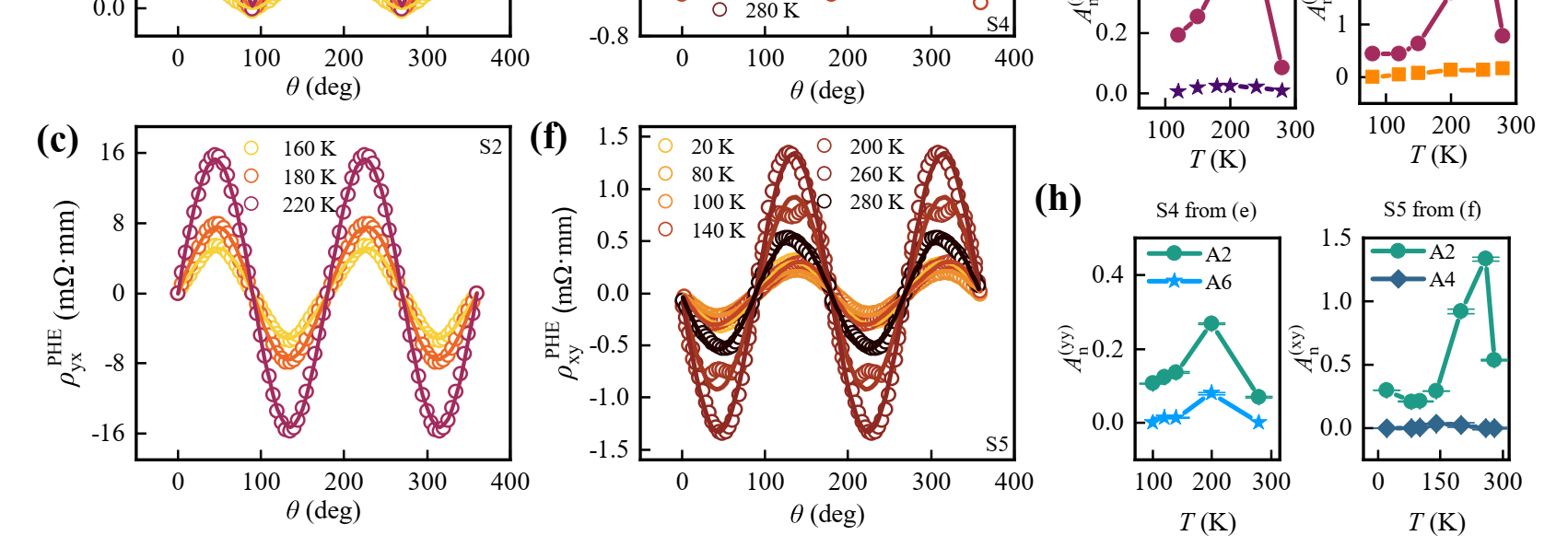
Figure 2. (a) Experimental schematic, (b) AMR and (c) PHE measured at various
temperatures under a fixed 9 T with the current j applied along the [21 1 0] direction (x-
axis). (d) Experimental schematic, (e) AMR and (f) PHE measured at 9 T with the
current j applied along the [011 0] direction (y-axis). Here the AMR ratio is defined as
(()-())/() × 100%. Solid lines in (b,c,e,f) represent fits based on the phenomenological model expressed as a sum of A n cos(n + n . An additional constant is also introduced for AMR. (g,h) Temperature dependence of the amplitudes A n
obtained with corresponding data labeled.
19







20 Figure 4. Temperature dependence of (a, d) first-harmonic coefficients (defined as V /I ), (b, e) second-harmonic nonlinear coefficients (defined as V 2 /I ), and (c, f) their ratios of the second-harmonic coefficient divided by the cube of the first-harmonic coefficient.
21