⬇ Download Markdown · ⬇ Download LaTeX · ⬇ original · view original
Epitaxial Strain Activates Altermagnetic Spin-Splitting Torques in RuO₂(100)
Qi Jia 1 , Seung Gyo Jeong 2 , Seungjun Lee 1 , Denis Tonini 1 , Anand Santhosh 2 , Yifei Yang 1 , Xiangrui Li 1 , Brahmdutta Dixit 1 , Shuang Liang 2 , Yu-Chia Chen 1 , Tony Low 1 , Bharat Jalan 2 , Jian-Ping Wang 1,2,†
1 Department of Electrical and Computer Engineering, University of Minnesota, 200 Union St. SE, Minneapolis, MN, 55455, USA
2 Department of Chemical Engineering and Materials Science, University of Minnesota, 421 Washington Ave. SE, Minneapolis, MN, 55455, USA Abstract The altermagnetic nature of rutile RuO₂ remains under active debate: bulk measurements indicate a nearly nonmagnetic ground state, whereas thin-film studies have reported symmetry-dependent transport signatures consistent with altermagnetism. Here, we provide experimental evidence that altermagnetic spin splitting in RuO₂ is a strain-stabilized emergent state rather than an intrinsic bulk property. Angular-resolved spin–torque measurements reveal a symmetry-selected spin Hall response characteristic of altermagnetic spin splitting, which is strongest in the strained regime but progressively suppressed as the lattice relaxes toward the bulk limit. Complementary magnetic measurements further reveal enhanced coercivity and exchange-bias behavior exclusively in strained films, indicating the emergence of a strain-stabilized magnetic state. First-principles calculations reproduce the strain-dependent evolution of the Néel order and spin-split electronic structure, supporting the experimental observations. Together, these results establish altermagnetic spin splitting in RuO₂ as a strain-stabilized emergent state and provide a unified explanation for the long-standing discrepancy between bulk and thin-film observations.
Introduction
Altermagnetism has emerged as a distinct magnetic phase that hosts momentum-dependent spin splitting without net magnetization, enabling spin-polarized transport in fully compensated systems 1–7 . Rutile RuO₂, a metallic oxide predicted to host symmetry-dependent spin-split electronic states, has become a prominent candidate for realizing such behavior at room temperature 8–10 . However, whether RuO₂ intrinsically hosts altermagnetic spin splitting remains under active debate.
Measurements that directly probe long-range magnetic order in bulk RuO₂, including neutron scattering, μSR 11,12 , Mössbauer spectroscopy 13 , and torque magnetometry 14 , consistently indicate a nearly nonmagnetic ground state with no evidence of robust long-range order 15 . Although early neutron studies suggested small-moment antiferromagnetism 8,10 , recent re-examinations indicate that these observations can instead arise from multiple scattering and structural anisotropy effects rather than intrinsic magnetic order 11–14 . Angle-resolved photoemission spectroscopy likewise fails to resolve clear spin-split electronic structures 16–18 . Together, these results point to an essentially nonmagnetic bulk ground state. In contrast, thin-film and heterostructure studies have revealed pronounced symmetrydependent transport responses inconsistent with a fully nonmagnetic ground state. Reports of anisotropic magnetoresistance, anomalous Hall effects, magnetic tunnel junction responses, and anisotropic spin orbit torques consistently exhibit pronounced symmetry-dependent signals 19–37 . Similar symmetry-dependent features have also been reported in spectroscopic measurements 27,38–41 . These observations are broadly consistent with the theoretically predicted altermagnetic spin splitting in RuO₂ 1,9 .
This apparent discrepancy between bulk-sensitive probes and thin-film observations raises a central question: whether the reported altermagnetic spin splitting reflects an intrinsic bulk property or emerges only under specific structural conditions. Recent theoretical studies suggest that the electronic ground state and magnetic order in RuO₂ are highly sensitive to lattice distortion, raising the possibility that altermagnetic spin splitting may emerge only under epitaxial strain 42–45 . In particular, RuO₂(100) grown epitaxially on TiO₂(100) is predicted to provide a unique platform in which epitaxial strain stabilizes altermagnetic spin splitting, in contrast to bulk and bulk-like RuO₂ 45 . However, in most previous studies, strain is not independently controlled but instead varies simultaneously with substrate choice, film thickness, and growth conditions, making it difficult to isolate the role of strain in stabilizing the spinsplit state 46–49 .
Here, we grow epitaxial RuO₂(100) thin films on TiO₂ substrates by hybrid molecular beam epitaxy (MBE), in which the anisotropic strain is systematically tuned via film thickness. On this platform, we perform symmetry-resolved ST-FMR measurements together with magnetic hysteresis characterization, allowing us to track both spin-splitting signatures and magnetic interactions across the strain-relaxation process. We find that the torque component consistent with momentum-dependent spin splitting is most pronounced in the strained regime and is progressively suppressed as the lattice relaxes toward the bulk limit. Complementary magnetic measurements further reveal strain-dependent interfacial interactions, providing independent evidence for a strain-stabilized magnetic state. Together, these results establish a thickness-controlled route for continuously tuning anisotropic epitaxial strain in RuO₂(100). This well-defined strain platform enables a direct examination of how magnetic order and symmetry-dependent spin transport evolve as the lattice progressively relaxes toward the bulk limit.
Thickness-Controlled Anisotropic Strain Evolution in Epitaxial RuO₂
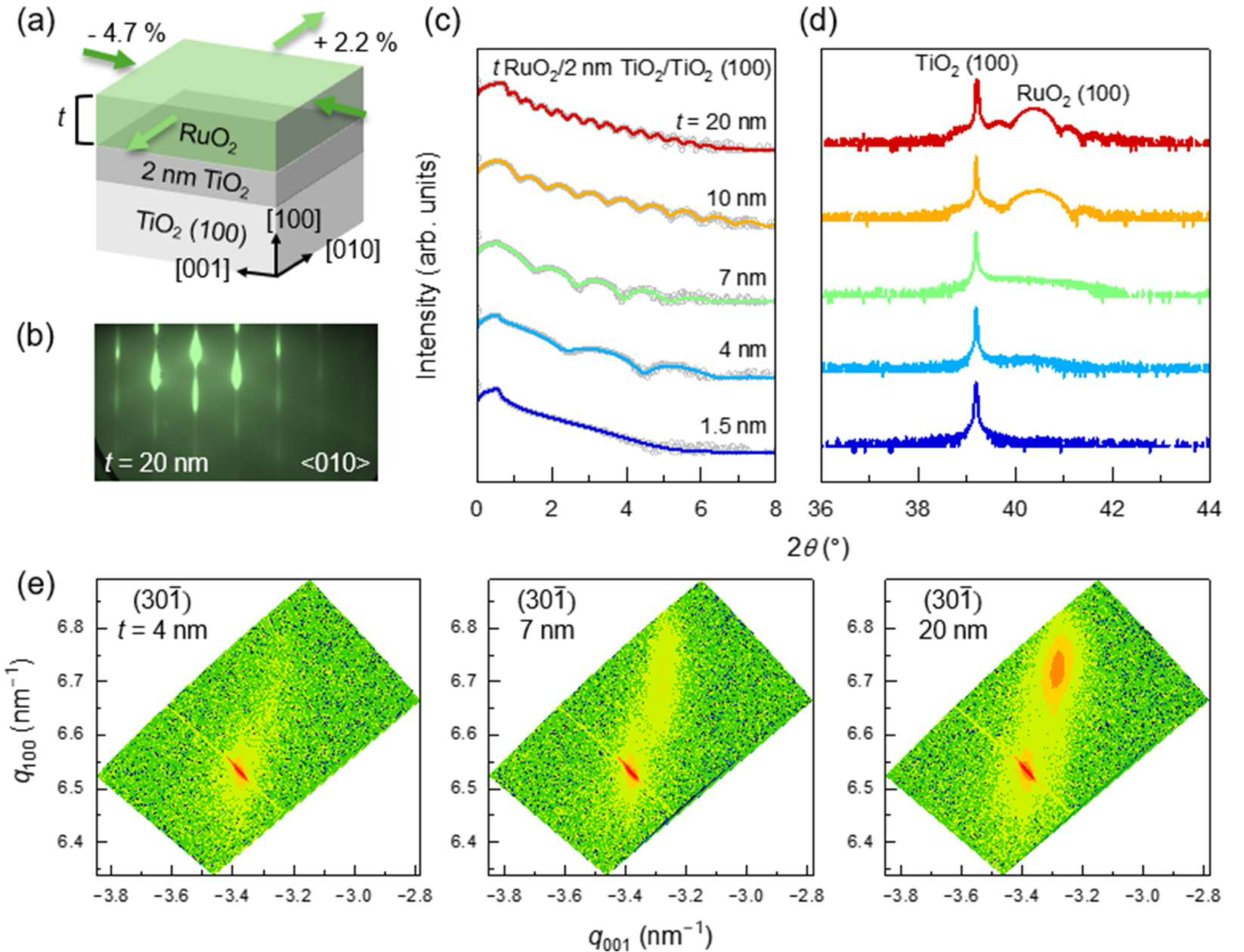
Figure 1 | Thickness-dependent anisotropic strain evolution in epitaxial RuO₂(100)/TiO₂(100) heterostructures. (a) Schematic
illustration of epitaxial RuO₂(100) thin films grown on TiO₂(100) substrates with a 2 nm TiO₂ buffer layer. (b) Representative in situ reflection
high-energy electron diffraction (RHEED) pattern of a 20 nm-thick RuO₂ film. (c) X-ray reflectivity (XRR) scans for RuO₂ films with
thicknesses ranging from 1.5 to 20 nm. (d) X-ray diffraction (XRD) θ–2θ scans of RuO₂(100) films on TiO₂(100) from 1.5 to 20 nm. (e)
Reciprocal space maps measured around the (301̄) reflection for 4, 7, and 20 nm RuO₂ films.
To establish a platform for systematically tuning epitaxial strain in RuO₂, we grew RuO₂(100) thin films on TiO₂(100) substrates with a 2 nm TiO₂ buffer layer using hybrid molecular beam epitaxy (MBE). The TiO₂ buffer layer was introduced to establish a uniform RuO₂/TiO₂ interface independent of substrate-to-substrate surface variations. For the rutile (100) orientation, the lattice mismatches between RuO₂ and TiO₂ are highly anisotropic, reaching −4.7% along the [001] direction and +2.2% along [010], as illustrated in Fig. 1a. This anisotropic lattice mismatch enables distinct relaxation behavior along the two in-plane crystallographic directions as the film thickness increases 50 .
The epitaxial growth and interface quality of the RuO₂ films were first confirmed by in situ reflection high-energy electron diffraction (RHEED) and X-ray reflectivity (XRR) measurements. Representative RHEED patterns for a 20 nm-thick RuO₂ film are shown in Fig. 1b, exhibiting streaky diffraction features characteristic of high-quality epitaxial growth. XRR scans in Fig. 1c display pronounced Kiessig fringes persisting up to ~8°, indicative of atomically smooth interfaces and excellent thickness uniformity throughout the film series. Quantitative fitting of the XRR spectra (solid lines) further confirms precise thickness control of the RuO₂ films over the thickness range from 1.5 to 20 nm. X-ray diffraction (XRD) θ–2θ scans shown in Fig. 1d reveal pronounced rutile (100) Bragg reflections from both the TiO₂ substrate and RuO₂ films, accompanied by clear Laue oscillations, indicating high crystalline coherence throughout the thickness series.
To directly probe the strain evolution, reciprocal space maps (RSMs) measured around the (301̄ ) reflection are presented in Fig. 1e for RuO₂ films with thicknesses of 4, 7, and 20 nm. While films below ~ 4 nm remain close to the coherently strained limit, a second diffraction feature emerges near q 001 ~ – 3.29 nm –1 once the film thickness reaches ~ 7 nm. The appearance of this additional peak indicates the coexistence of coherently strained and partially relaxed lattice regions within the film. As the thickness further increases, the intensity of the relaxed component grows progressively, revealing a continuous release of epitaxial strain along the [001] direction. In contrast, reciprocal space maps measured around the (310) reflection (Fig. S1) show that the RuO₂ films remain coherently locked to the TiO₂ substrate along the [010] direction even at 20 nm thickness, establishing a highly anisotropic strain relaxation process in RuO₂(100)/TiO₂(100) heterostructures.
The [001] lattice constants associated with the relaxed diffraction component were estimated to be 3.047 Å and 3.054 Å for the 7 nm and 20 nm RuO₂ films, respectively, with an uncertainty of ±0.005 Å. The extracted lattice constants progressively approach the relaxed bulk value with increasing thickness, further confirming the gradual reduction of epitaxial strain along [001]. Together, these results establish a thickness-controlled route for continuously tuning anisotropic epitaxial strain in RuO₂(100), providing a well-defined platform for examining its impact on the magnetic and spin-transport properties discussed below.
Symmetry-Selective Spin Transport in Strained RuO₂
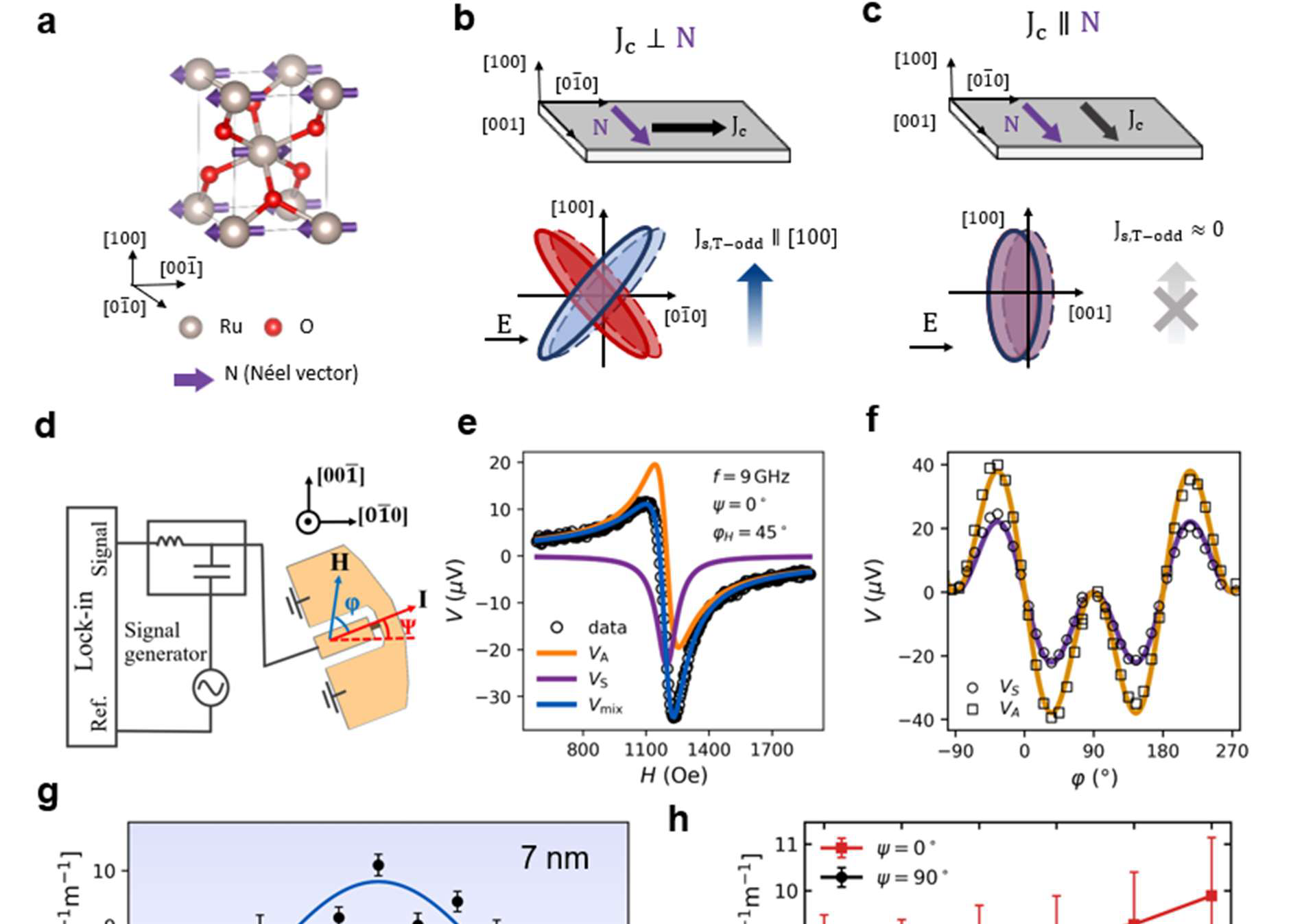
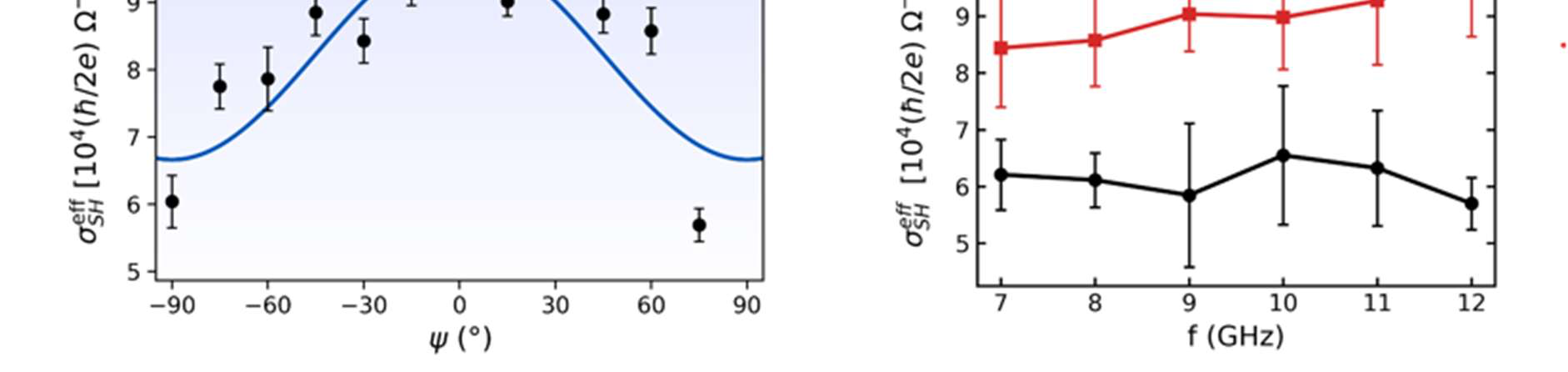
Figure 2. Symmetry-dependent T-odd spin Hall conductivity in epitaxial RuO₂. (a) Crystal structure of rutile RuO₂ showing the Néel
vector (N). (b,c) Symmetry analysis of the T-odd spin Hall effect for (J c ⊥ N) and (J c ∥ N), respectively. (d) Device geometry and
measurement configuration for spin-torque ferromagnetic resonance (ST-FMR), defining the current direction ψ relative to the crystal axes
and the magnetic field angle φ. (e) Representative mixing-voltage spectrum 𝑉 as a function of magnetic field for ψ = 0° and φ = 45°,
decomposed into symmetric ( 𝑉 ) and antisymmetric ( 𝑉 ) components. (f) Angular dependence of the symmetric and antisymmetric
components as a function of φ. (g) Effective Spin Hall conductivity (SHC) as a function of current direction ψ, exhibiting a pronounced
cos 2𝜓 dependence with maximum at ψ = 0°, consistent with T-odd spin splitting contribution. (h) Frequency dependence of the extracted
effective SHC for ψ = 0° and 90°, demonstrating that the angular anisotropy is robust and independent of excitation frequency.
Fig. 2a shows the rutile crystal structure of RuO₂, where the Néel vector is aligned along the [001] direction. Under this symmetry, altermagnetic spin splitting is expected to generate an additional spin-polarization component when the charge current is applied along the [010] direction, i.e., perpendicular to the Néel vector (Jc ⊥ N), as illustrated in Fig. 2b. In contrast, this spin-splitting contribution is symmetry-forbidden when the current is applied along the [001] direction, parallel to the Néel vector (Jc ∥ N), leaving only the conventional response (Fig. 2c). We refer to this symmetry-selective spin-polarization contribution as the Todd component, whereas the conventional contribution is denoted as the T-even component. The appearance of a finite T-odd response therefore provides a measurable transport signature associated with the symmetryselective spin-splitting contribution.
To test this symmetry prediction experimentally, we first focus on a representative strained RuO₂(100) film with a thickness of 7 nm and perform spin-torque ferromagnetic resonance (ST-FMR) measurements on patterned RuO₂/Py bilayer devices. The measurement geometry is illustrated in Fig. 2d, where the current direction ψ is defined relative to the [010] crystallographic direction and systematically varied by rotating the device orientation in 15° increments, thereby allowing the symmetry dependence of the generated spin current to be directly probed. The external magnetic field is applied at an in-plane angle φ relative to the current direction, allowing the torque symmetry to be independently evaluated for each current direction ψ. A representative mixing-voltage spectrum measured on a 7 nm RuO₂ sample at ψ = 0° and φ = 45° is shown in Fig. 2e. The signal is decomposed into symmetric and antisymmetric Lorentzian components using a standard ST-FMR fitting procedure (see Methods). Fig. 2f shows the angular dependence of the extracted symmetric and antisymmetric voltage components for the ψ = 0° device. The experimental data are well reproduced by the standard ST-FMR model using the leading 𝑐𝑜s𝜙sin2𝜙 term. The excellent agreement confirms that the measured response follows the expected ST-FMR angular symmetry, supporting the extraction procedure described in Methods.
We next examine the dependence of the extracted effective SHC on the current direction ψ. As shown in Fig. 2g, the effective SHC exhibits a pronounced twofold angular dependence that is well described by a cos2ψ symmetry. The SHC reaches its maximum for the current applied along [010] (Jc ⊥ N) and decreases toward [001] (Jc ∥ N). This behavior is consistent with the symmetry-selective contribution illustrated in Fig. 2b,c, where the T-odd spin-splitting contribution is allowed for Jc ⊥ N but forbidden for Jc ∥ N. To assess the reproducibility of the observed anisotropy, we further examine the extracted SHC over the frequency range from 7 to 12 GHz. As shown in Fig. 2h, the effective SHC remains consistently larger for ψ = 0° than for ψ = 90° across the entire frequency range, indicating that the symmetry-selective response persists over the measured frequency window.
Thickness dependence of spin splitting torque
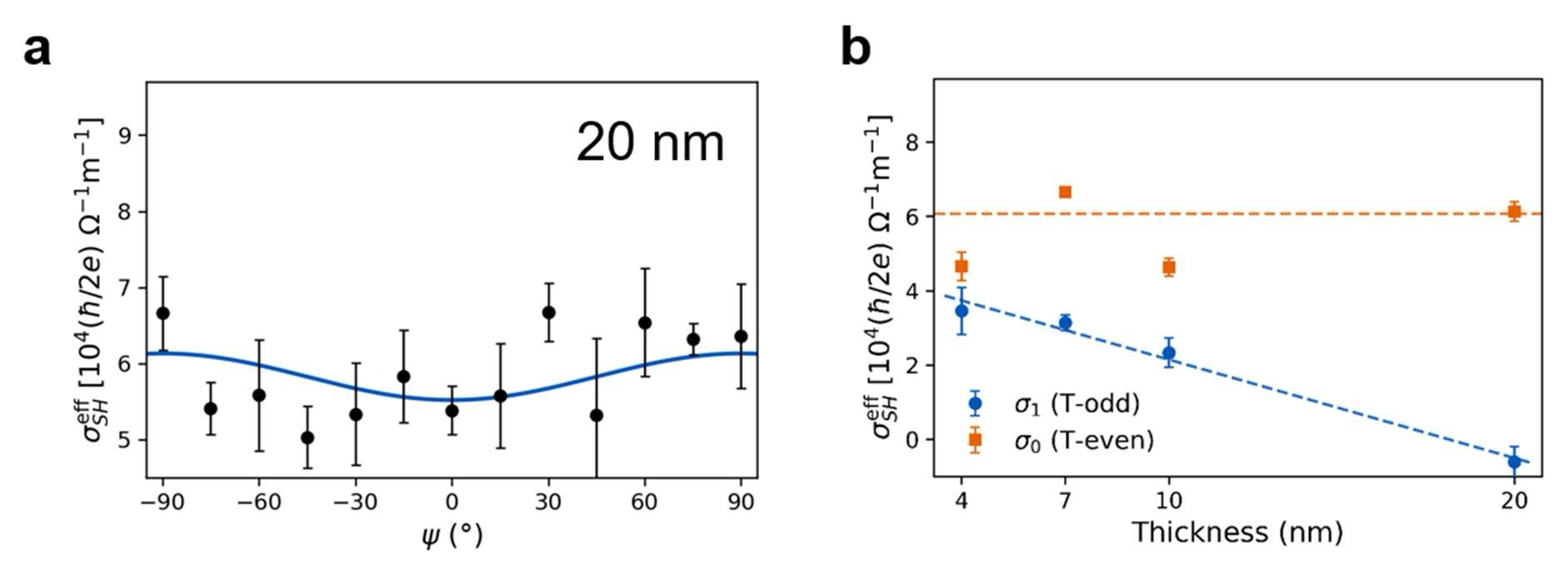
Figure 3 | Thickness dependence of symmetry-selective spin response in RuO₂(100). (a) Effective Spin Hall conductivity (SHC) as a
function of current direction ψ for RuO₂ films with thicknesses of 20 nm. (b) Thickness dependence of the extracted SHC components. The
constant term remains nearly unchanged across the thickness range, while the amplitude of the angular (T-odd) component decreases
continuously and approaches zero in the thick-film limit.
Having established the presence of a symmetry-selective spin response in the strained regime, we next investigate its evolution with film thickness. Representative angular-dependent measurements for a 20 nm RuO₂ film are shown in Fig. 3a. In contrast to the pronounced angular dependence observed in the strained 7 nm film (Fig. 2g), the effective SHC of the 20 nm film exhibits only a weak angular dependence on the current direction ψ. The disappearance of the characteristic positive cos2ψ anisotropy indicates that the symmetry-selective spin response is strongly suppressed as the film approaches the relaxed limit. The same behavior is observed across different excitation frequencies for the 20 nm sample (Fig. S5), confirming that the suppression of the T-odd contribution is robust against measurement conditions.
To quantify this evolution, the angular dependence of the effective SHC for each thickness is fitted using Acos2ψ + C, where (C) represents the angle-independent background contribution (T-even component), and (2A), corresponding to the peak-to-valley difference of the angular modulation, is taken as the magnitude of the T-odd component. The extracted T-even and T-odd contributions are summarized in Fig. 3b. While the T-even component remains approximately unchanged across the thickness series, the T-odd component decreases systematically with increasing thickness and approaches zero in the thick-film limit.
Because the T-odd term originates from the symmetry-selective spin-splitting contribution introduced in Fig. 2, its suppression indicates a progressive collapse of the spin-splitting-related response, while the conventional spin-current response remains largely unchanged. The disappearance of the T-odd contribution in thick films indicates that the spin-splitting-related symmetry-selective response is not an intrinsic property of relaxed RuO₂, but instead emerges only within the strained epitaxial regime. The systematic suppression of the T-odd component closely follows the thickness-dependent strain relaxation established in Fig. 1, establishing a strong correlation between epitaxial strain and the symmetry-selective spin response.
FORC characterization
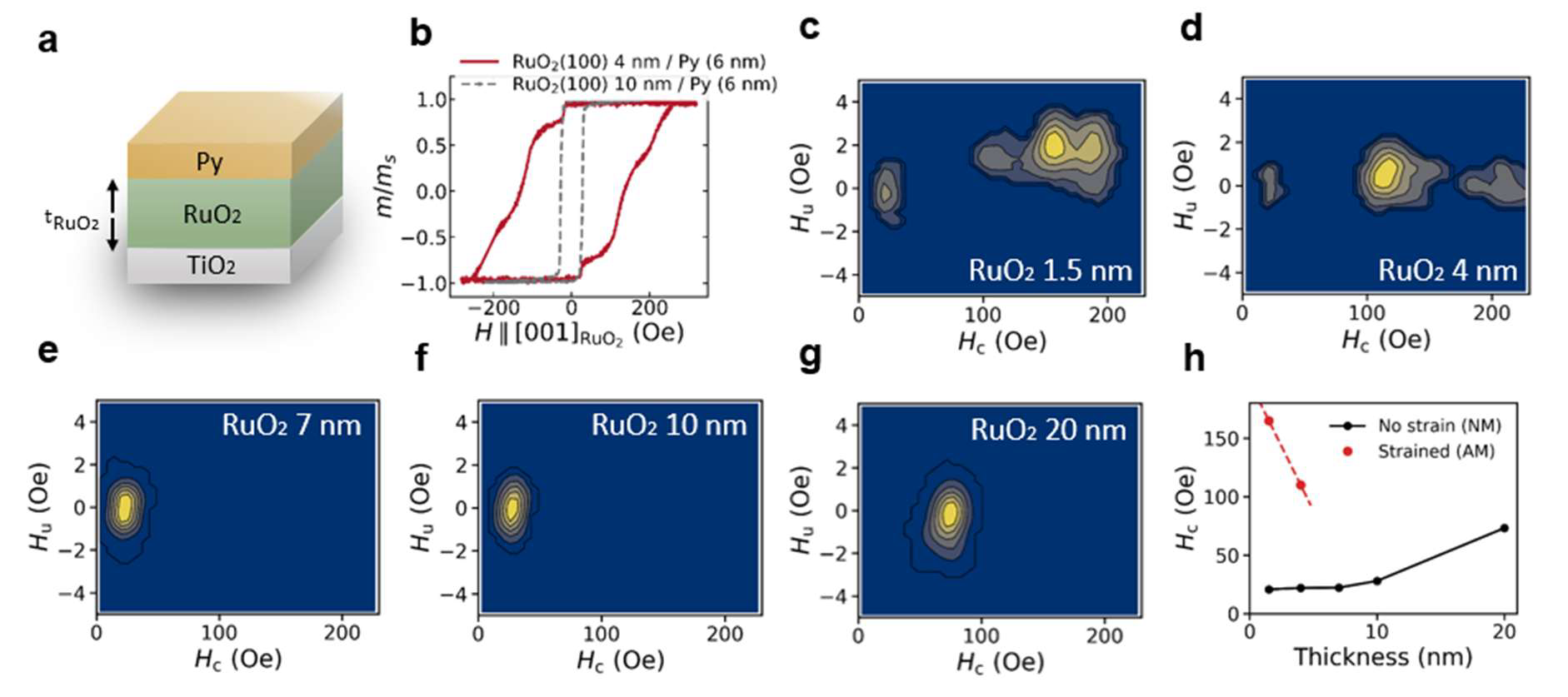
Figure 4 | Thickness-dependent evolution of interfacial magnetic state revealed by FORC analysis. (a) Schematic illustration of the
RuO₂/Py heterostructure grown on TiO₂(100), where the RuO₂ thickness is varied to tune the epitaxial strain. (b) Representative M–H loops
measured at 10 K with the magnetic field applied along the [001] direction for RuO₂/Py bilayers, comparing thin (4 nm) and thicker (10 nm)
RuO₂ layers. (c–g) First-order reversal curve (FORC) distributions for RuO₂ thicknesses of 1.5 nm (c), 4 nm (d), 7 nm (e), 10 nm (f), and 20
nm (g). (h) Thickness dependence of the extracted coercive fields. The low-coercivity component evolves smoothly with thickness and
represents a baseline response dominated by the Py layer. In contrast, the high-coercivity component appears only in the strained regime and
disappears upon strain relaxation, identifying it as a strain-stabilized interfacial magnetic contribution.
To further probe the magnetic origin of the strain-dependent transport response, we examine the magnetization behavior of RuO₂/Py bilayers. The M–H loops measured at room temperature reveal a clear in-plane magnetic anisotropy, with the easy axis aligned along the [001] direction of RuO₂ (see Fig. S6). This anisotropy is consistent across all thicknesses. While it is consistent with a preferred alignment of an underlying magnetic order along the [001] direction, it does not by itself distinguish the microscopic origin, as it may also arise from interfacial anisotropy 51 .
Upon cooling to 10 K under zero-field conditions, a marked thickness-dependent contrast in the magnetization behavior is observed. Representative M–H loops along [001] are shown in Fig. 4a. The Py layer on thicker RuO₂ (10 nm) exhibits sharp, nearly single-step switching with relatively small coercivity, whereas that on thinner RuO₂ (4 nm) shows substantially enhanced coercivity accompanied by distinct multi-step switching behavior. Because all samples contain identical Py layers deposited under identical conditions, the observed differences originate from the underlying RuO₂ layer.
To resolve this evolution, we perform first-order reversal curve (FORC) measurements as a function of RuO₂ thickness (see Methods). The FORC distribution maps switching events into a two-dimensional space of coercive field (H c ) and interaction field (H u ), where distinct peaks correspond to independent switching populations, with H c characterizing the switching barrier and H u capturing the local interaction field. The results are shown in Fig. 4b–f. A low-coercivity population persists across all thicknesses and remains centered at H u ≈ 0. In contrast, a distinct high-coercivity population emerges exclusively in the strained regime and disappears upon increasing thickness beyond 7 nm. In the 1.5 nm film, this population exhibits a pronounced shift along H u , revealing a finite exchange bias field.
Most importantly, the coexistence of a finite exchange bias and an enhanced high-coercivity switching population in the strained regime demonstrates that epitaxial strain stabilizes an additional interfacial magnetic state that is absent in relaxed RuO₂ 52 . Upon strain relaxation, this magnetic state disappears over a narrow thickness range between 4 and 7 nm, revealing a clear magnetic crossover between strained and relaxed RuO₂. In contrast, the low-coercivity switching population persists throughout the entire thickness series and evolves continuously with thickness, indicating that it represents the baseline magnetic response of the RuO₂/Py bilayer (Fig. 4g). Notably, the emergence of this strain-stabilized magnetic state coincides with the appearance of the T-odd transport response identified in Fig. 3, suggesting a common strain-dependent origin. Although the high-coercivity population disappears over a narrower thickness range than the transport signal, the two probes are expected to sample different length scales, with FORC primarily sensitive to interfacial magnetic interactions and transport measurements integrating contributions from a larger volume of the RuO₂ layer.
Temperature-dependent coercivity measurements (Fig. S7) further distinguish the high-Hc switching population from the baseline low-Hc response. The anomalous high-Hc component exhibits a much stronger temperature dependence yet remains observable up to room temperature, demonstrating that the additional magnetic state persists under the same conditions where the T-odd transport response is measured.
Theoretical calculation
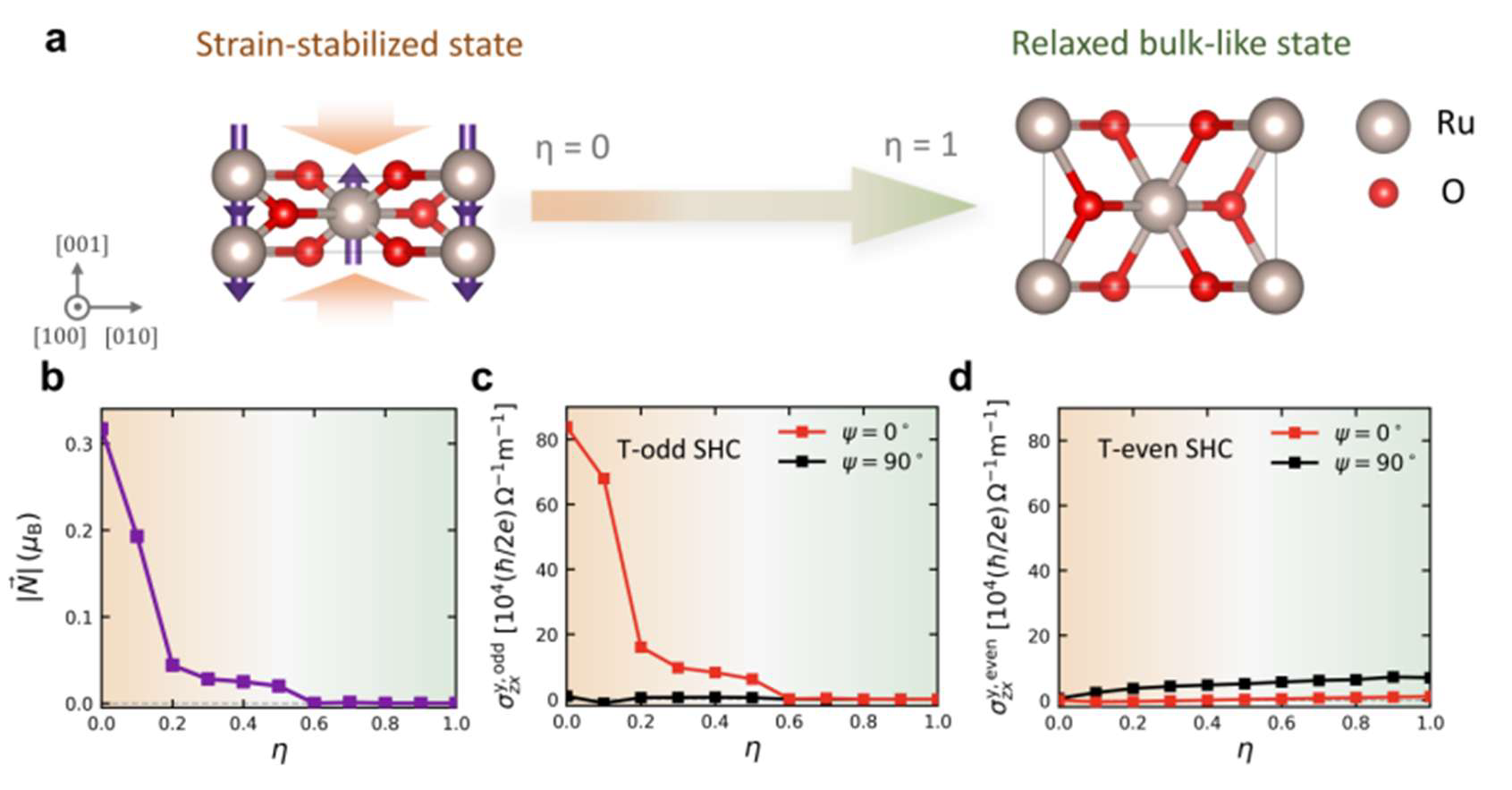
Figure 5 | Strain-dependent magnetic order and spin Hall conductivity of the (100) RuO 2 thin film from first-principles calculations.
(a) Schematic illustration of the strain-driven crossover from a strain-stabilized magnetic state to a relaxed bulk-like state, parameterized by
the strain relaxation factor η. The strained state (η = 0) hosts a finite magnetic order, whereas the magnetic order is progressively suppressed as η approaches unity. (b) Magnitude of the Néel vector |𝑁 ⃗| = |𝜇⃗ − 𝜇⃗ |/2 as a function of the strain parameter 𝜂 , where 𝜂 = 0
corresponds to the coherently strained limit matching the TiO₂ substrate and 𝜂 = 1 to the fully relaxed RuO₂ lattice along [001]. (c) T-odd
and (d) T-even of components the spin Hall conductivity 𝜎 , and 𝜎 , as a function of ε for current directions ψ = 90° (black) and ψ
= 0° (red), where ψ indicates a rotation angle of 𝑥 from the [010] crystallographic axis.
To clearly understand the microscopic origin of the thickness-dependent transport properties, we performed first-principles calculations based on density functional theory (DFT). We first investigated
the Néel vector magnitude, defined as |𝑁 ⃗| = |𝜇⃗ − 𝜇⃗ |/2 , where 𝜇⃗ and 𝜇⃗ are two
opposite local magnetic moments of the Ru atoms. The strain dependence was introduced through 𝑎 = (1 − 𝜂)𝑎 + 𝜂𝑎 , where 𝜂 denotes the strain parameter. In our calculations, the other in-plane lattice constant along the [010] direction was fixed to the TiO 2 substrate value, whereas the out-of-plane lattice constant along [100] was fully relaxed, consistent with experimental observations.
Fig. 5a shows the calculated |𝑁 ⃗| as a function of 𝜂. The Néel vector remains essentially zero for 𝜂 > 0.6, but increases rapidly at larger strain, reaching ~ 0.3 𝜇 per Ru site near the fully-strained limit. This indicates that the relaxed lattice supports a nonmagnetic ground state, whereas magnetic order in (100)-oriented RuO₂ is strain-activated. Fig. 5b and 5c show the strain dependence of the representative
T-odd (𝜎 , ) and T-even (𝜎 , ) components of the SHC tensor obtained from linear-response
calculations. (see Methods) The T-odd component closely tracks the onset of |𝑁 ⃗| for ψ = 0°, becoming sizable only for 𝜂 ≤ 0.6. By contrast, it remains strongly suppressed for ψ = 90° due to the symmetry of the altermagnetic spin-split bands. The small residual T-odd response for ψ = 90° near 𝜂 = 0 originates from the spin-orbit coupling. In contrast, the T-even component is finite across the entire strain range and varies smoothly with 𝜂, reflecting its spin-orbit-driven origin, which is less sensitive to magnetic order. These two contributions, therefore, have distinct microscopic origins and strain dependences.
This separation provides a natural framework for the thickness-dependent angular response in ST-FMR. The constant term in the A cos2ψ + const. fits (Fig. 3a), which is nearly thickness-independent and survives in the relaxed 20 nm film, is consistent with the T-even contribution, whereas the angular component A, which decays continuously with thickness, tracks the strain-induced T-odd contribution.
We note that the in-plane anisotropy of the rutile (100) surface does not strictly forbid a ψ-dependent Teven SHC, and this contribution may itself vary with strain and Fermi level. Nevertheless, two key observations identify the T-odd channel as the dominant origin of the observed angular contrast. First, the angular component extracted from the ST-FMR measurements vanishes in the relaxed limit, coinciding with the collapse of the Néel order and the disappearance of the calculated T-odd SHC. Second, this disappearance occurs simultaneously with the loss of the additional magnetic state identified by the FORC measurements (Fig. 4), providing an independent magnetic signature of the strain-stabilized phase. Although a strain-dependent T-even anisotropy may also contribute to the angular response, it cannot naturally explain the simultaneous disappearance of the magnetic signatures and the angular transport response upon strain relaxation. Taken together, these results provide compelling evidence that epitaxial strain stabilizes the altermagnetic spin-split state in RuO₂(100), giving rise to the symmetry-selective spin transport observed experimentally.
Discussion
The present results establish epitaxial strain as the key parameter governing the emergence of the altermagnetic spin-split state in RuO₂. As the lattice progressively relaxes toward the bulk limit, the Todd transport response, the strain-stabilized magnetic state, and the calculated Néel order are all systematically suppressed. This unified evolution provides a direct explanation for the long-standing discrepancy between bulk-sensitive measurements and thin-film observations in RuO₂, indicating that the experimentally observed altermagnetic behavior is a strain-stabilized phenomenon of epitaxial thin films rather than a universal property of the relaxed bulk crystal. More broadly, our findings demonstrate that epitaxial strain can qualitatively reshape competing magnetic and electronic ground states, providing an effective route for engineering symmetry-dependent spin transport phenomena in altermagnetic materials.
References 1. Šmejkal, L., González-Hernández, R., Jungwirth, T. & Sinova, J. Crystal time-reversal symmetry breaking and spontaneous Hall effect in collinear antiferromagnets. Sci. Adv. 6, eaaz8809 (2020).
Song, C. et al. Altermagnets as a new class of functional materials. Nat. Rev. Mater. 10, 473– 485 (2025).
Tamang, R., Gurung, S., Rai, D. P., Brahimi, S. & Lounis, S. Altermagnetism and Altermagnets:
A Brief Review. Magnetism 5, 17 (2025).
Rev. X 12, 040501 (2022).
Rev. X 12, 031042 (2022).
9, 041316 (2022).
Astron. 56, 227503 (2025).
Berlijn, T. et al. Itinerant Antiferromagnetism in ${\mathrm{RuO}}_{2}$. Phys. Rev. Lett. 118, 077201 (2017).
Ahn, K.-H., Hariki, A., Lee, K.-W. & Kuneš, J. Antiferromagnetism in ${\mathrm{RuO}}_{2}$ as $d$-wave Pomeranchuk instability. Phys. Rev. B 99, 184432 (2019).
${\mathrm{RuO}}_{2}$ Determined by Resonant X-ray Scattering. Phys. Rev. Lett. 122, 017202 (2019).
Spin Rotation. Phys. Rev. Lett. 132, 166702 (2024).
dynamics and Mössbauer spectroscopy. Cell Rep. Phys. Sci. 6, 102852 (2025).
${\mathrm{RuO}}_{2}$. Phys. Rev. Res. 8, L012072 (2026).
Phys. Rev. X 15, 031044 (2025).
${\mathrm{RuO}}_{2}$. Phys. Rev. Lett. 133, 176401 (2024).
photoemission spectroscopy. Phys. Rev. B 111, 134450 (2025).
Osumi, T. et al. Spin-degenerate bulk bands and topological surface states associated with Dirac nodal lines in ${\mathrm{RuO}}_{2}$. Phys. Rev. B 113, 085116 (2026).
Bose, A. et al. Tilted spin current generated by the collinear antiferromagnet ruthenium dioxide. Nat. Electron. 5, 267–274 (2022).
${\mathrm{RuO}}_{2}$. Phys. Rev. Lett. 128, 197202 (2022).
5, 735–743 (2022).
Tschirner, T. et al. Saturation of the anomalous Hall effect at high magnetic fields in altermagnetic RuO2. APL Mater. 11, 101103 (2023).
Guo, Y. et al. Direct and Inverse Spin Splitting Effects in Altermagnetic RuO2. Adv. Sci. 11, 2400967 (2024).
${\mathrm{RuO}}_{2}$. Phys. Rev. Lett. 129, 137201 (2022).
25, 16985–16991 (2025).
Mater. 37, 2507764 (2025).
Commun. 16, 5646 (2025).
Pt/Co/Ru/RuO2(101) multilayers. Appl. Phys. Lett. 126, 012401 (2025).
${\mathrm{RuO}}_{2}$ Evinced by Abnormal Spin Splitting Torque. Phys. Rev. Lett. 132, 086701 (2024).
Bai, H. et al. Efficient Spin-to-Charge Conversion via Altermagnetic Spin Splitting Effect in Antiferromagnet ${\mathrm{RuO}}_{2}$. Phys. Rev. Lett. 130, 216701 (2023).
Liu, Y. et al. Inverse Altermagnetic Spin Splitting Effect-Induced Terahertz Emission in RuO2. Adv. Opt. Mater. 11, 2300177 (2023).
Chu, R. Y. et al. Third-Order Nonlinear Hall Effect in Altermagnet ${\mathrm{RuO}}_{2}$.
Phys. Rev. Lett. 135, 216703 (2025).
Diffusion Length in Altermagnetic RuO2. Adv. Funct. Mater. 34, 2313332 (2024).
Rev. nwag203 (2026) doi:10.1093/nsr/nwag203.
Lett. 132, 056701 (2024).
Altermagnetic Spin-Splitting Effect from Inverse Spin Hall Effect in ${\mathrm{RuO}}_{2}$.
Phys. Rev. Lett. 133, 056701 (2024).
Commun. 16, 8235 (2025).
Magnetic Linear Dichroism. Chin. Phys. Lett. 42, 027301 (2025).
Fedchenko, O. et al. Observation of time-reversal symmetry breaking in the band structure of altermagnetic RuO2. Sci. Adv. 10, eadj4883 (2024).
Smolyanyuk, A., Mazin, I. I., Garcia-Gassull, L. & Valentí, R. Fragility of the magnetic order in the prototypical altermagnet ${\mathrm{RuO}}_{2}$. Phys. Rev. B 109, 134424 (2024).
RuO$_2$ Films. Preprint at https://doi.org/10.48550/arXiv.2510.26581 (2026).
${\mathrm{RuO}}_{2}$ by proximity to Landau-Pomeranchuk instability. Phys. Rev. B 111, 174425 (2025).
doi:10.1021/acs.nanolett.6c00768.
Lett. 26, 5873–5881 (2026).
${\mathrm{RuO}}_{2}$. Phys. Rev. Lett. 136, 026702 (2026).
Mater. 6, 135 (2025).
RuO2(101) surface. Appl. Phys. Lett. 124, 162402 (2024).
ACKNOWLEDGMENTS
This work was supported partially by the National Science Foundation (NSF) through the University of Minnesota MRSEC under Award No. DMR-2011401. This project was also supported in part by NSF ASCENT program TUNA: No. 2230963. Parts of this work were carried out in the Characterization Facility, University of Minnesota, which receives partial support from the NSF through the MRSEC (Award No. DMR-2011401) and the NNCI (Award No. ECCS-2025124) programs. Portions of this work were conducted in the Minnesota Nano Center, which is supported by the NSF through the NNCI under Award No. ECCS-2025124. Film synthesis and structural characterizations (S.G.J. and B.J.) were supported by the U.S. Department of Energy through grant Nos. DE-SC0020211, and (partly) DESC0024710. Film growth was performed using instrumentation funded by AFOSR DURIP awards FA9550-18-1-0294 and FA9550-23-1-0085. S.G.J., B.J., S.L., and T.L. also benefited from the Air Force Office of Scientific Research Multi University Research Initiative (AFOSR MURI, Award No. FA9550-25-1-0262). A.S. acknowledges support from the NSF through the MRSEC program under Award No. DMR-2011401.