
⬇ Download Markdown · ⬇ Download LaTeX · ⬇ original · view original · CSV: table 1
Wun-Hao Kang (康文豪), 1 Yu-Ting Hsiao (蕭妤庭), 1 Jozef Genzor, 2 Yaroslav Zhumagulov, 3 Ming-Hao Liu (劉明豪), 1 and Denis Kochan 1, 2 1
3
Department of Physics and Center of Quantum Frontiers of Research and Technology (QFort),
National Cheng Kung University, Tainan 70101, Taiwan 2 Institute of Physics, Slovak Academy of Sciences, 84511 Bratislava, Slovakia 3 Institute of Physics, Ecole Polytechnique Fédérale de Lausanne (EPFL), CH-1015 Lausanne, Switzerland
Altermagnets offer a unique venue for spin transport due to their vanishing net magnetization and momentum-dependent spin splitting. We demonstrate that a homotopic Lifshitz transition in two-dimensional altermagnets creates a regime where carriers are confined to geometrically protected, spin-selective open channels. These channels originate from non-contractible Fermi contours and act as metallic analogues of topological edge modes: they are sharply directional, spin-pure, and protected by Fermi-surface winding rather than an energy gap or boundary confinement. We predict three striking magneto-transport signatures of such topologically reconfigured altermagnets: open-orbit focusing with perfect lensing and retroreflection, high-efficiency magnetic spin filtering, and chirality-tunable spin persistent currents in altermagnetic nanotubes. Our results establish altermagnets as a platform where Fermi-surface winding directly engineers spin transport, bypassing the requirements for ferromagnetism or strong spin-orbit coupling. These findings identify Lifshitztransitioned altermagnets as a route to topology-enabled spintronics that transcends the limitations of conventional edge-state paradigms.
The search for robust spin transport mechanisms that do not rely on ferromagnetic order is a central theme of modern spintronics [1–5]. In most established platforms, spin control is achieved either by exchange fields in ferromagnets or by spin–orbit coupling in nonmagnetic materials. Altermagnets (AMs) [6–10] open a qualitatively different route. They host spin-split electronic bands despite vanishing net magnetization, and thereby combine magnetic functionality with the absence of macroscopic stray fields. This makes them promising candidates for spin-current generation and spin filtering [11–21].
Most current discussions of altermagnetic transport focus on the existence of spin splitting itself. A less explored question is whether the topology of the spinresolved Fermi contour can by itself generate qualitatively new spin-transport regimes. This question is especially natural in two dimensions, where a Fermi contour is a closed curve on the Brillouin-zone torus and can therefore undergo changes not only of shape but also of homotopy class [22, 23]. Across a Lifshitz transition, spin-split Fermi contours of AM may evolve from contractible closed loops to non-contractible open lines that wind around the torus. Such a transition does not merely reshape the Fermi surface: it reorganizes the available carrier trajectories and can fundamentally alter transport [22–25].
Here we show that this mechanism is realized in a twodimensional d-wave AM and leads to a distinct open-orbit phase with direct spintronic consequences. In the openorbit regime the corresponding quasiparticles propagate through effectively one-dimensional bulk channels. Remarkably, the two spin species are funneled into perpendicular directions, so that the metallic bulk itself acts as a spin-selective network of one-dimensional (1D) transport paths. In this sense, spin-momentum locked open-orbit phase provides a bulk analogue of directional topological transport: its key organizing principle is not a boundary state or a band Chern number, but the winding of the spin-resolved Fermi contour on the Brillouin-zone torus.
This simple observation has several striking consequences. First, in a perpendicular magnetic field the open channels support transverse magnetic focusing (TMF) with perfect retroreflection when the focal points coincide with the sample edge. Second, in multiterminal Hall-bar geometries they enable strong spin filtering and nonlocal spin-current generation. Third, when the same system is wrapped into a nanotube, the interplay of open-orbit transport and quantized circumferential motion yields chirality-dependent persistent currents that are either fully spin-polarized or entirely quenched. Together, these results identify Lifshitz-transitioned AMs as a platform where Fermi-surface topology becomes a practical tool for engineering spin transport. Remarkably, such nontrivially winding Fermi contours—and hence the regime of open-orbit AM spintronics are genuine only for d-wave AMs and being topologically excluded for g-, i-, or higher-wave AM classes.
While metallic AMs such as CrSb [27–29] and possibly also RuO 2 [21, 30–33] provide key experimental benchmarks, their high carrier densities make spin-resolved open Fermi contours difficult to tune. Rather than ruling out open-orbit-driven spin physics in AM, the way forward lies in more reconfigurable AM platforms, such as van der Waals materials [34–36], semiconductors [37–39], oxide/perovskite families [40, 41], ultracold-atom AM simulators [42], and multiferroic settings [43–46], where 2
FIG. 1. Spectral and homotopic characteristics of 2D d-wave AM. Doping dependence of (a) density of states (DOS) per unit area; (b) Fermi contour topologies; and (c) electronic band structure along the high-symmetry path. All based on the model Hamiltonian H, Eq. (1), placed on the square lattice with the primitive vectors a 1 = (a, 0) and a 2 = (0, a). The electronic states are spin-polarized, in all panels—the up and down spin states are colored by red and blue. Before the first, µ 0 < −2 = −4 min(|t 0 |, |t j |) eV, and after the second, µ 0 > +2 = 4 min(|t 0 |, |t j |) eV, van Hove singularity the Fermi contours are homotopically trivial (contractible to a point). In between, i.e. for µ 0 ∈ (−2, +2) eV—shaded areas—the Fermi contours are homotopically nontrivial and opposite spin polarizations propagate with perpendicular group velocities v g↑ and v g↓ . Corresponding homotopic visualization of the open and closed orbits on the 2D torus is displayed in the lower inset of panel (c). The upper inset in panel (c) shows the k-path in the 1st Brillouin zone along which the electronic band structure is calculated. The three insets on the right of panel (c) show the semi-classical AM cyclotron orbits at µ 0 = −3, 0, and 3 eV in the half-plane y > 0 at B z = 6.3 T. Correspondingly from the bottom to top: electron-like, sgn(1/m ∗ ) = (+, +), closed and skipping orbits; open-orbits with a hyperbolic mass tensor sgn(1/m ∗ ) = (+, −); and the hole-like, sgn(1/m ∗ ) = (−, −), closed and skipping orbits. The middle inset reveals the open-orbit magnetic focusing: a sequence of magnetic-field-defined focal hotspots, f ↑ and f ↓ , generated by the hyperbolic mass tensor, at which spin-polarized trajectories converge independently of their initial injection velocity, for animation see SM [26].
doping, strain, confinement, interfaces, twisting and electric fields offer direct control over Fermi-surface topology. Motivated by this prospect, in this Letter we investigate previously unexplored topological properties of two-dimensional (2D) AMs, focusing on homotopic transitions, efficient magnetic spin-filtering, TMF and spin persistent currents. We use the minimal two-band tightbinding Hamiltonian of d-wave AM [8, 47–51]:
that resides on a square lattice given by primitive lattice (†) vectors a
1 and a 2 . Here c mσ are annihilation (creation) operators acting on electrons with spin σ on lattice site m, and s 0/x/y/z are, correspondingly, 2-by-2 identity and Pauli spin matrices. The first term in H tunes a number of particles via the chemical potential µ 0 [52]. The second term represents nearest neighbor hybridization comprising of an isotropic, spin-unresolved hopping t 0 , and of an anisotropic, spin-selective hopping t j imparting the characteristic d-wave spin texture of AM; in the main text we employ t 0 = −1 eV and t j = −0.5 eV, while Supplemental Material (SM) [26] discusses other parameter regimes. Hopping sign factor ν n←m encodes a direction of the nearest neighbor hopping between site m and n. It is equal to +1 (−1) if the hopping path n ← m is aligned along ±a 1 (±a 2 ) lattice vectors. The spin-projection σ is a good quantum number, and the corresponding eigenspectrum of H reads
E σ (k, µ 0 ) =2t +,σ cos (k · a 1 ) + 2t −,σ cos (k · a 2 ) − µ 0 ,
(2) where t ±,σ = t 0 ± σt j . Figures 1(a) and (b) show, respectively, the density of states (DOS) and the evolution of the Fermi contours, E σ (k, µ 0 ) = 0, revealing clear signatures of the van Hove singularities and homotopic transitions.
Homotopic Lifshitz transitions (HLTs) and spin magneto-filtering. HLT [22, 24, 25] is a spectral crossover when the Fermi surface S F changes its homotopy group. Although HLT is accompanied by the van Hove singularity it does not, in general, entail a gap closing and reopening, unlike topological transitions driven by changes of Chern numbers. Conventional Lifshitz transitions, akin to HLTs, normally refer to transitions that alter the number of connected components of S F while leaving their homotopy class unchanged. Rather 3
which counts how many times the contour wraps around the two fundamental cycles of T 2 . The different regimes are then naturally classified; w = (0, 0) for closed (contractible) orbits, and w , (0, 0) for the open Fermi contours. Inspecting Fig. 1(b), the open spin-up Fermi contours (red lines) acquire winding vector w ↑ = (0, ±1), whereas the spin-down ones (blue lines) carry w ↓ = (±1, 0). Hamiltonians of d-wave AMs with higher winding vectors that directly generalizes Eq. (2) are further scrutinized in [53].
and Eq. (2), the open-orbit states with opposite spins propagate in k-space along mutually perpendicular directions. Consequently, under a homogeneous transverse magnetic field B = (0, 0, B z ), carriers with opposite spins will reciprocally trace perpendicular real-space trajectories (rescaled by ℏ/(e|B z |) and rotated by 90 ◦ ). This furnishes a homotopy-protected pathway toward highefficiency magneto-spin-filtering and robust spatial spinseparation in the Lifshitz-transitioned d-wave AMs.
Moreover, whether the given magneto-trajectory remains closed or becomes open curve correlates with the signature of the inverse effective-mass tensor (1/m ∗ σ ) ab = ℏ −2 ∂ k 2 a k b E σ (k, µ 0 ), that changes its definiteness at van Hove singularities µ 0 = ±4 min(|t 0 |, |t j |). Positive signature, Region I, occurring for dop-
responds to closed electron-like orbits, while negative signature, Region II, realized for µ 0 ∈ (4 min(|t 0 |, |t j |), 4 max(|t 0 |, |t j |)] covers closed hole-like states. The most interesting hyperbolic (or saddle-point) signature, Region III, furnishing open Fermi contours is
resentative solutions of the semiclassical equations of motion, ṙ σ = v σ = 1 ℏ ∂ k E σ (k) and ℏ k̇ = −e(v σ × B) are shown for both spin projections and for three representative dopings—signatures of (1/m ∗ σ ) ab —in the rightmost insets of Figs. 1(c).
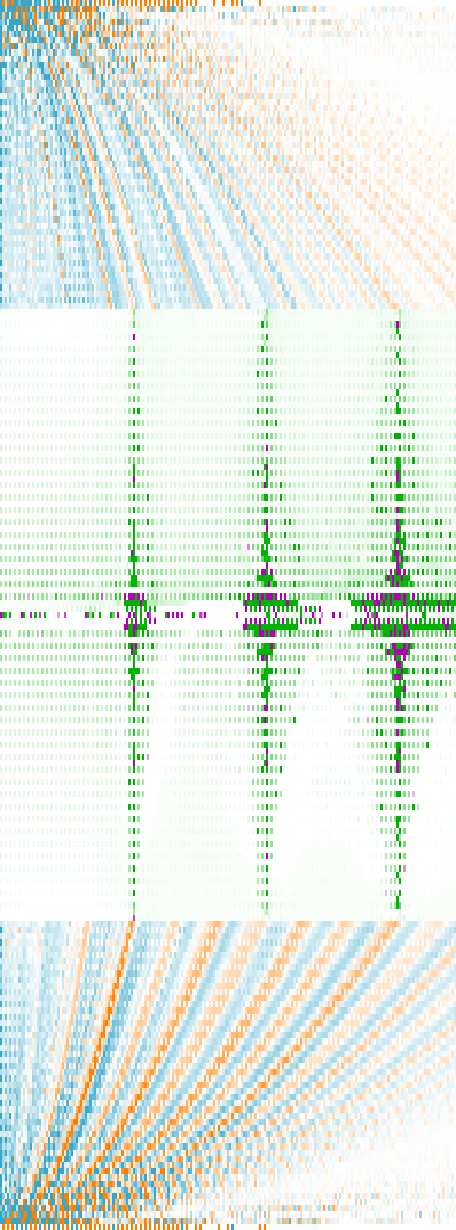
FIG. 2. kwant-computed four-point terminal resistances R 25,16 and R 24,16 , panels (a) and (b), versus out-of-plane field B z and doping µ 0 . Simulated 6-terminal Hall-bar [inset in (b)] consists of AM (at 45 ◦ with respect to bar edges) and 6 metallic leads, each with 130-propagating transverse modes. Color bars and ranges of R—mΩ vs. Ω—are different for the regions supporting closed (I and II) and open (III) Fermi contours. Insets in (a) show the representative topographies of spin-resolved (up/down in red/blue) Fermi contours
orbit Regions I and II show characteristic TMF oscillations due to electron-like (positively-defined 1/m ∗ ) and hole-like
gion III (hyperbolic effective mass 1/m ∗ ), magneto-transport is effectively 1D—spin up (down) states propagate along directions given by the primitive lattice vectors—which yields 4 spin-polarized current between injector 2 ⃝ and collector ⃝ (or 6 ⃝). This makes I 24 (I 26 ) larger than I 25 , and hence R 25,16 > R 24,16 in Region III. Calculations are done at zero temperature, the absence of thermal smearing causes sharp transitions of R’s at the boundaries between Regions I and III and between III and II.
TMF and open-orbit magneto-focusing. To corroborate our semiclassical framework and homotopybased analysis, we perform numerical transport simulations using kwant [54] to calculate non-local resistances R αβ,γδ = V γδ /I αβ as functions of magnetic field and dop4 ing, see Fig. 2. We simulate six-terminal Hall-bar geometry shown in the inset of Fig. 2(b), with semi-infinite metallic leads—each featuring parabolic band dispersion and 130 transverse modes to ensure reliable transport


calculations. The leads are 100 nm wide, displaced by 600 nm from the sample edges, and laterally separated by 2 µm. The probe region has width W = 1 µm, and the AM lattice constant is set to a = 1 nm [55]. Here we consider the particularly interesting case of an


AM rotated by 45 ◦ with respect to the Hall-bar edges; other orientations are presented in the SM [26]. Comparison of R 25,16 and R 24,16 for two different sourcedrain paths, I 2→5 and I 2→6 , are shown in Figs. 2(a) and


(b). In the Region I the two signals behave almost identically—closed electron-like orbits evolve into edgepropagating skipping orbits and generate conventional TMF oscillations [56]. In the closed-orbit Region II,


however, R 25,16 exhibits more pronounced oscillations than R 24,16 . The perceptibly noisier TMF response of 4 R 24,16 is due to more extended route from the drain ⃝ to the voltage probe 6 ⃝. Lorentz-force deflection toward 6 forces hole-carriers into longer, bouncing-off- probe ⃝ the-edge paths, which increases boundary scattering and defocusing and therefore impedes the TMF. In the Region III, R 25,16 is generally larger than R 24,16 due to a spatial alignment of current paths carried by open-orbits that are preferentially spreading in a direction from the 2 to drain 4 source ⃝ ⃝, see the semiclassical simulation in the right insets of Fig. 1(c). Hence the current entering the denominator of R αβ,γδ = V γδ /I αβ increases, which lowers the value of R 24,16 .
Generally, in the open-orbit range, the unique AM dispersion produces pronounced, doping-independent peaks in R (green coniferous shapes in centers of Fig. 2) at
(4)
where W is the width of the Hall-bar, a lattice constant and Φ 0 = h/e the flux quantum. A giant magnetoresistance due to open-orbits was reported in γ- PtBi 2 [57]. Semiclassically, B z,n here corresponds to magnetic focusing conditions for the effectively 1D open2 orbits, see Fig. 1(c); electrons injected from terminal ⃝ converge onto a series of spin-polarized hotspots, f ↑ and f ↓ . When any of these focal points align with the opposite edge of the Hall bar, the carriers undergo perfect retro-reflection (contra-current), which generates a singular response in the resistance R, for animation see SM [26]. Conceptually, open-orbit magnetic focusing establishes Lifshitz-transitioned AM as a promising platform for spin-resolved electron-optic lensing, beam steering, and collimation. Although our semiclassical picture is used only as a heuristic guide, the results in Fig. 2 are fully quantum coherent and thus include magnetic breakdown, anomalous broadening, coherent orbitnetwork formation [58, 59] and possibly also other saddlepoint magneto-anomalies including, for example, the solid-state analogue of the Hawking-Unruh effect [60, 61].
FIG. 3. Persistent spin currents (per unit length) J ↑ and J ↓ versus doping µ 0 and magnetic flux Φ/Φ 0 , for AM (central panels) and NM (right panels) nanotubes with the square (upper panels) and rhombic (lower panels) chiralities. Figures (a) and (b) show schematics of the nanotube geometries with respect to the axial magnetic field B and its polar gauge potential A ϕ . Panels (c,d) and (e,f) show, comparatively, J ↑ (Φ, µ 0 ) and J ↓ (Φ, µ 0 ) for ballistic (disorder-free) AM and NM nanotubes in weak magnetic fields employing t 0 = −1 eV, and correspondingly t j = −0.5 eV (AM) and t j = 0 eV (NM). For AM tube with square-chirality, panel (c); tuning µ 0 across the open-orbit range µ 0 ∈ (−2, 2) eV makes PC perfectly spinpolarized rendering such nanotubes as topology-empowered spin-current generators. In a sharp contrast, the AM nanotubes with rhombic-chirality, panel (d), exhibit a complete quench of spin PCs within the same doping range, making them ideal persistent-current insulators. For NM nanotubes with square-chirality, panel (e), the spin currents are moderately suppressed near µ 0 ≈ 0 (this suppression further enlarges under disorder; see SM), whereas the rhombic tube, panel (f), remains persistent, however, both spin currents mix and produce no net spin polarization.
Persistent spin currents. Rolling 2D AM into a nanotube—hollow thin-wall cylinder of radius R—and threading it with a homogeneous axial magnetic field B creates another topologically non-trivial system. This geometry intertwines momentum-space homotopy (HLT tuned by the chemical potential µ 0 ), the U (1) holonomy associated with the Aharonov-Bohm (AB) phase set by the magnetic flux Φ = πR 2 B, and the non-simply connected topology of the nanotube itself, whose fundamental group is π 1 (nanotube) = Z.
For simplicity, we first describe geometry shown in Fig. 3(a), where translational symmetry is preserved along the in-plane lattice vector a 2 = a(0, 1). Correspondingly, the AM plane is axially wrapped into a cylin5 der of radius R along a 1 = a(1, 0) such that points (x, y) and (x + 2πR, y) are identified, in order to match the lattice periodicity 2πR = N a with N ∈ N. The ABflux renders all nearest neighbor hoppings in H, Eq. (1), that are directed along ±a 1 by an additional U (1)-phase, Φ Thus H loses translational symmetry exp(±i 2π
N Φ 0 ). along a 1 and becomes flux-periodic H(Φ + Φ 0 ) = H(Φ). The combined effect of the AB-phase and circumferential momentum quantization gives in the present case, Fig. 3(a), an exact eigenspectrum, E σ (m, k y , Φ, µ 0 ), that takes the form of Eq. (2) with a replacement k x →
for computational details see SM [26].
Although we described the simplest wrapping defined by the primitive lattice vector a 1 , the construction extends straightforwardly to AM nanotubes with an arbitrary chirality vectors χ = χ 1 a 1 + χ 2 a 2 ; the two simplest
are displayed in Figs. 3(a) and (b). To determine persistent current (PC) [62, 63] of a nanotube of chirality χ we find eigenvalues, E σ (m, k, Φ, µ 0 ), of the corresponding Hamiltonian H χ (Φ, µ 0 ) and compute the spin-resolved grand-potential (per unit length) Ω σ (Φ, µ 0 ), the corresponding spin PC (per unit length) reads:
(5)
Figures 3(c,d) and 3(e,f) display, respectively, flux and doping dependencies of the PCs, J ↑ and J ↓ , for the dwave AM nanotube and its normal-metal (NM, t j = 0) counterpart at zero temperature. The upper panel shows results for the square and lower for the rhombic-chirality. Effects of hard-wall boundary conditions (relevant for short nanotubes) and disorder, including details of analytical and numerical calculations are discussed in the SM [26].
Three salient features emerge strikingly in Figs. 3(c)- (f) as the doping is tuned across the homotopically non-
(1) For the AM nanotube of square-chirality, Figs. 3(a,c), the PC becomes perfectly spin-up polarized. The mechanism is rooted in the Fermi-contour topography and the directions of group velocities as illustrated in the inset of panel 3(c). The spin-up states (red) move along the circumference—one branch clockwise and the other counterclockwise. When the nanotube is threaded by a magnetic field, the resulting AB flux minimally couples to the underlying momenta. This coupling accelerates the group velocity of one branch, v g + m e ∗ A ϕ , while impeding the other, −v g + m e ∗ A ϕ . The resulting velocity imbalance yields a non-zero, perfectly spin-polarized PC. The spin-down states propagate axially and as they do not close into loops they are effectively decoupled from the AB flux. Conceptually, AB-flux driven Lifshitztransitioned AMs can therefore act as topology-enabled platforms towards functional spintronic devices supplying perfectly spin-polarized persistent currents. The similar shape of the Fermi contours also explains a generation of PCs for rhombic NM nanotube close to the half-filling µ 0 ≈ 0, Fig. 3(f), the resulting currents are, however, spin-unpolarized.
(2) By contrast, AM nanotubes with rhombicchirality, Figs. 3(b,d), exhibit complete suppression of both spin-resolved persistent currents throughout the homotopically non-trivial region of µ 0 ∈
of panel (d), states of opposite spin polarizations propagate along tilted directions ±a 1 and ±a 2 —their helical orbits never close into loops and therefore remain entirely immune to the AB flux. While PC is a hallmark of mesoscopic coherence, it often poses a formidable challenge to spin- and charge-based electronics, introducing unwanted dissipation, signal interference, and decoherence. In this context, the quenching of PCs in AM nanotubes with rhombic-chirality is a remarkable asset. The Lifshitz-transitioned bands enforce open, helical trajectories that preclude a coupling to AB flux. In this sense, the non-trivial AM homotopy not only suppresses persistent mesoscopic responses; it transforms their absence into a decisive functional advantage. A similar quenching occurs also for the NM nanotubes with square-chirality, Fig. 3(e), in the immediate vicinity of half filling, µ 0 ≈ 0, where the Fermi contours evolve into perfectly tilted squares that yield helical current propagation without a coupling to the AB-flux.
(3) In Regions I and II, J ↑ and J ↓ are more strongly mixed, and the overall PC profiles of AM and NM nanotubes become more similar.
Altermagnetic spin-instabilities driven by HLT. Enhanced DOS near the van Hove singularities typically drives system instabilities and triggers potential phase transitions. To scrutinize how homotopic transitions in AMs corroborate with many-body correlations in longitudinal and transverse spin channels we investigate bare, static spin-susceptibilities, χ 0 ∥/⊥ (q), at room temperature [64].
Figure 4 illustrates the momentum-dependent bare susceptibilities χ 0 ∥/⊥ (q) for a representative set of chemical potentials. We vary µ 0 from −4 eV, corresponding to zero filling, to µ 0 = 0, corresponding to half filling [65]. At half filling the open Fermi contours become perfectly nested, see left inset in Fig. 4, correspondingly the max-
point. Moreover, in the most doping ranges, χ 0 ∥ > χ 0 ⊥ , implying a softer longitudinal channel with spatially modulated magnitude of ⟨s z (r)⟩ and zero ⟨s x/y (r)⟩. Remarkably and uniquely to AMs, this trend reverses near the HLT, see the brick red lines in Fig. 4 corresponding to the van Hove singularity at µ 0 = −2 eV. Around this doping the transverse spin-fluctuations softens—the global transverse maximum, χ 0 ⊥ (M-point), is larger than 6

FIG. 4. Longitudinal and transverse bare susceptibilities, χ 0 ∥/⊥ (q), versus momenta and doping; calculations are for
red lines, χ 0 ⊥ > χ 0 ∥ , indicating “paramagnon-like” instability. Insets show: 1) evolution of the critical interaction strength
corresponding µ 0 = −4 min(|t 0 |, |t j |), and, 2) Fermi contours at the half filling with M-point (π, π) nesting.
the corresponding longitudinal one, χ 0 ∥ (q ≈ Γ-point). This crossover points to an emergence of “paramagnonlike” spin-density-wave [66] with q c ⊥ ≈ (±π, ±π) owing to a spiral or helical in-plane spin texture, ⟨s x/y (r)⟩ , 0. This paramagnon-like instability shall emerge in Lifshitz transitioned AMs for |t j |/|t 0 | ≲ 0.55 or ≳ 1.8, see inset in Fig. 4. Importantly, the AM spin splitting already breaks the relevant spin symmetry at the single-particle level. The resulting paramagnon-like instability is therefore not a Goldstone mode, but a soft collective tendency in an explicitly spin-anisotropic background.
As our main objective is to establish open-orbit topological spintronics in AMs, we focus here on the stability of the open-orbit spin texture against repulsive,
systematic analysis of the correlated phases that may emerge in 2D AMs is left for future work. Within a Stoner-type criterion, the open-orbit state remains stable as long as the effective spin-selective interaction, U σ,−σ (q) − U σ,σ (q), does not exceed the critical interaction scale U c ∥/⊥ ≡ 1/ max q χ 0 ∥/⊥ (q) in the corresponding longitudinal or transverse channel. In the present model, the most vulnerable regime occurs near half filling, where
trast, states close to the homotopic Lifshitz transition remain stable up to substantially stronger interactions, with the transverse critical scale approaching U c ⊥ ≃ 4|t 0 |.
This indicates that the open-orbit regime is not merely a fine-tuned single-particle feature, but survives over a sizable window of repulsive spin-selective interactions.
Open orbits of g-wave AM on the double torus. A convenient way to understand why a g-wave AM does not generate open Fermi orbits in the physical 2D Brillouin zone torus T 2 , is to compare it with an auxiliary construction on a genus-two surface. The relevant octagonal fundamental polygon, when its edges are pairwise identified, defines an orientable Riemann surface Σ g=2 — double torus—rather than the Brillouin-torus. In this representation, the two four-petal Fermi contours with a g-wave AM symmetry are shown in Fig. 5: the spin-up contour is plotted as a solid red curve, while the spindown contour is plotted as a dashed blue curve.
The left panel corresponds to a doping regime in which the Fermi contours remain strictly inside the octagon and do not intersect its boundary. After the octagon edges are glued, each four-petal contour therefore becomes a closed contractible loop on Σ g=2 , one with a characteristic “chromosome-X” shape is shown explicitly. The right panel illustrates the Lifshitz point, where the Fermi contour touches and coalesces with the octagon edges. Under the same edge identifications, the red four-petal contour is then transformed into four non-contractible cycles on Σ g=2 , each carrying unit winding around one of the handles (fundamental cycles) of the double torus.
This construction shows that the apparent open-orbit structure of the g-wave contour is naturally realized only after lifting the problem to the genus-two surface Σ g=2 . Since the physical Brillouin zone remains genus-one torus T 2 , and not Σ g=2 , these homotopically non-trivial cycles on the double torus do not correspond to genuine open Fermi orbits in the original 2D Brillouin zone.
The same topological reasoning extends to higher angular AM harmonics. For example, an i-wave AM can be represented by an analogous construction on a genusthree Riemann surface Σ g=3 , where its Fermi contours may form non-contractible cycles on the auxiliary surface without implying open orbits on the physical Brillouin-
FIG. 5. Evolution of loop topologies and homotopy classes with g-wave AM symmetry on the octagon fundamental domain and on the double torus Σ g=2 . The left panels show closed orbits, while the right panels illustrate the homotopically nontrivial case of open orbits at corresponding Lifshitz transition. The drawings on the double torus Σ g=2 show only the spin-up states, represented by red curves. The corresponding spin-down states unfold analogously, but wind around the double torus in the complementary (through the holes) direction.
7 Summary and Outlook. Spin-momentum locked Fermi-surface topology of d x 2 −y 2 -altermagnets provides a theoretical route to engineered spin transport. Once the system is tuned across the homotopic Lifshitz transition, the electronic motion reorganizes into spin-selective open 1D channels owing to hyperbolic inverse mass tensor. In this homotopically-protected regime, the system supports a set of magneto-responses that are rarely combined within a single platform: magnetic spin filtering, nonlocal spin separation, perfect retroreflection and electron lensing, and chirality-controlled generation or quenching of fully spin-polarized persistent currents. The underlying functionalities are stable and resilient against electronelectron interactions, and are tied specifically to the dwave spin-momentum locked altermagnets—excluding g-
Beyond the minimal model studied here, this mechanism suggests several concrete opportunities. In planar devices, open-orbit altermagnets could operate as fieldtunable spin routers, spin beam splitters, or nonlocal spin injectors without ferromagnetic contacts. In cylindrical or ring geometries, they offer a route to equilibrium spincurrent sources and to mesoscopic architectures in which unwanted persistent charge currents are selectively suppressed by design. More broadly, the work highlights Lifshitz-transitioned altermagnets as a platform where topology of the Fermi surface, rather than topology of a filled band manifold and associated edge states, becomes the organizing principle for spintronic functionality. We predict that metallic room-temperature d-wave altermagnets KV 2 Se 2 O [67] and Rb 1−δ V 2 Te 2 O [68] are especially promising platforms for open-orbit topological spintronics—a path toward robust, symmetry-enabled spin control in systems that remain gapless, electrically accessible, and compatible with high-mobility transport.
References. [1] I. Žutić, J. Fabian, and S. Das Sarma, Rev. Mod. Phys.
76, 323 (2004). [2] J. Sinova, S. O. Valenzuela, J. Wunderlich, C. H. Back,
and T. Jungwirth, Rev. Mod. Phys. 87, 1213 (2015). [3] V. Baltz, A. Manchon, M. Tsoi, T. Moriyama, T. Ono,
and Y. Tserkovnyak, Rev. Mod. Phys. 90, 015005 (2018). [4] A. Dal Din, O. J. Amin, P. Wadley, and K. W. Edmonds,
npj Spintronics 2, 25 (2024). [5] A. Manchon, J. Železný, I. M. Miron, T. Jungwirth,
J. Sinova, A. Thiaville, K. Garello, and P. Gambardella, Rev. Mod. Phys. 91, 035004 (2019). [6] L. Šmejkal, J. Sinova, and T. Jungwirth, Phys. Rev. X
12, 031042 (2022). [7] I. Mazin (The PRX Editors), Phys. Rev. X 12, 040002
(2022). [8] L. Šmejkal, J. Sinova, and T. Jungwirth, Phys. Rev. X
12, 040501 (2022). [9] C. Song, H. Bai, Z. Zhou, L. Han, H. Reichlova, J. H. Dil,
10, 473 (2025). [10] T. Jungwirth, J. Sinova, R. M. Fernandes, Q. Liu,
jkal, Nature 649, 837 (2026). [11] R. González-Hernández, L. Šmejkal, K. Výborný, Y. Ya-
hagi, J. Sinova, T. Jungwirth, and J. Železný, Phys. Rev. Lett. 126, 127701 (2021). [12] L. Šmejkal, A. B. Hellenes, R. González-Hernández,
(2022). [13] A. Bose, N. J. Schreiber, R. Jain, D.-F. Shao, H. P.
Nair, J. Sun, X. S. Zhang, D. A. Muller, E. Y. Tsymbal, D. G. Schlom, and D. C. Ralph, Nature Electronics 5, 267 (2022). [14] H. Bai, L. Han, X. Y. Feng, Y. J. Zhou, R. X. Su,
Q. Wang, L. Y. Liao, W. X. Zhu, X. Z. Chen, F. Pan,
(2022). [15] Z. Feng, X. Zhou, L. Šmejkal, L. Wu, Z. Zhu, H. Guo,
R. González-Hernández, X. Wang, H. Yan, P. Qin,
J. Sinova, T. Jungwirth, and Z. Liu, Nature Electronics 5, 735 (2022). [16] K. Samanta, D.-F. Shao, and E. Y. Tsymbal, Nano Let-
ters 25, 3150 (2025). [17] P.-H. Fu, Q. Lv, Y. Xu, J. Cayao, J.-F. Liu, and X.-L.
Yu, npj Quantum Materials 10, 111 (2025). [18] L. Bai, W. Feng, S. Liu, L. Šmejkal, Y. Mokrousov,
and Y. Yao, Advanced Functional Materials 34, 2409327 (2024). [19] S. S. Fender, O. Gonzalez, and D. K. Bediako, Journal
of the American Chemical Society 147, 2257 (2025). [20] R. Tamang, S. Gurung, D. P. Rai, S. Brahimi, and S. Lou-
nis, Magnetism 5, 10.3390/magnetism5030017 (2025). [21] C.-T. Liao, Y.-C. Wang, Y.-C. Tien, S.-Y. Huang, and
D. Qu, Phys. Rev. Lett. 133, 056701 (2024). [22] I. M. Lifshitz, Soviet Physics JETP 11, 1130 (1960). [23] Y. M. Blanter, M. I. Kaganov, A. V. Pantsulaya, and
A. A. Varlamov, Physics Reports 245, 159 (1994). [24] I. M. Lifshitz, M. I. Kaganov, and V. A. Peschanskii,
Soviet Physics JETP 5, 876 (1957). [25] M. I. Kaganov and I. M. Lifshits, Soviet Physics Uspekhi
22, 904 (1979). [26] See Supplemental Material at URL-will-be-inserted-by-
publisher: for further calculational details and other parameter regimes. [27] M. Zeng, M.-Y. Zhu, Y.-P. Zhu, X.-R. Liu, X.-M. Ma, Y.-
J. Hao, P. Liu, G. Qu, Y. Yang, Z. Jiang, K. Yamagami, M. Arita, X. Zhang, T.-H. Shao, Y. Dai, K. Shimada,
Science 11, 2406529 (2024). [28] G. Yang, Z. Li, S. Yang, J. Li, H. Zheng, W. Zhu, Z. Pan,
Y. Xu, S. Cao, W. Zhao, A. Jana, J. Zhang, M. Ye, Y. Song, L.-H. Hu, L. Yang, J. Fujii, I. Vobornik, M. Shi,
nications 16, 1442 (2025). [29] J. Ding, Z. Jiang, X. Chen, Z. Tao, Z. Liu, T. Li, J. Liu,
J. Sun, J. Cheng, J. Liu, Y. Yang, R. Zhang, L. Deng, W. Jing, Y. Huang, Y. Shi, M. Ye, S. Qiao, Y. Wang, Y. Guo, D. Feng, and D. Shen, Phys. Rev. Lett. 133, 206401 (2024). [30] O. Fedchenko, J. Minár, A. Akashdeep, S. W. D. Souza,
D. Vasilyev, O. Tkach, L. Odenbreit, Q. Nguyen, D. Kutnyakhov, N. Wind, L. Wenthaus, M. Scholz, K. Rossnagel, M. Hoesch, M. Aeschlimann, B. Stadtmüller, M. Kläui, G. Schönhense, T. Jungwirth, A. B. Hellenes, 8 G. Jakob, L. Šmejkal, J. Sinova, and H.-J. Elmers, Science Advances 10, eadj4883 (2024). [31] S. M. Hussain and K. Son, Physica B: Condensed Matter
716, 417723 (2025). [32] I. H. Choi, S. G. Jeong, B. Jalan, and J. S. Lee, Nano
Convergence 13, 1 (2026). [33] Y.-C. Wang, Z.-Y. Shen, C.-H. Lin, W.-C. Hsu, Y.-S.
Chen, Y.-Y. Chin, A. K. Singh, W.-L. Lee, C.-T. Chen, S.-Y. Huang, and D. Qu, Nano Letters 26, 2548 (2026). [34] R. B. Regmi, H. Bhandari, B. Thapa, Y. Hao, N. Sharma,
J. McKenzie, X. Chen, A. Nayak, M. El Gazzah, B. G. Márkus, L. Forró, X. Liu, H. Cao, J. F. Mitchell, I. I. Mazin, and N. J. Ghimire, Nature Communications 16, 4399 (2025). [35] Y. Liu, J. Yu, and C.-C. Liu, Phys. Rev. Lett. 133,
206702 (2024). [36] J. W. González, T. Brumme, E. S. Morell, and A. M.
León, npj 2D Materials and Applications 10, 11 (2025). [37] O. J. Amin, A. Dal Din, E. Golias, Y. Niu, A. Za-
kharov, S. C. Fromage, C. J. B. Fields, S. L. Heywood, R. B. Cousins, F. Maccherozzi, J. Krempaský, J. H. Dil, D. Kriegner, B. Kiraly, R. P. Campion, A. W. Rushforth, K. W. Edmonds, S. S. Dhesi, L. Šmejkal, T. Jungwirth, and P. Wadley, Nature 636, 348 (2024). [38] R. D. Gonzalez Betancourt, J. Zubáč, R. Gonzalez-
Hernandez, K. Geishendorf, Z. Šobáň, G. Springholz, K. Olejník, L. Šmejkal, J. Sinova, T. Jungwirth, S. T. B. Goennenwein, A. Thomas, H. Reichlová, J. Železný, and D. Kriegner, Phys. Rev. Lett. 130, 036702 (2023). [39] K. D. Belashchenko, Phys. Rev. Lett. 134, 086701 (2025). [40] M. Naka, Y. Motome, and H. Seo, npj Spintronics 3, 1
(2025). [41] S. V. Streltsov and S.-W. Cheong, npj Quantum Materi-
als 10, 102 (2025). [42] P. Das, V. Leeb, J. Knolle, and M. Knap, Phys. Rev.
Lett. 132, 263402 (2024). [43] M. Gu, Y. Liu, H. Zhu, K. Yananose, X. Chen, Y. Hu,
(2025). [44] X. Duan, J. Zhang, Z. Zhu, Y. Liu, Z. Zhang, I. Žutić,
and T. Zhou, Phys. Rev. Lett. 134, 106801 (2025). [45] R. Peng, S. Fang, P. Ho, F. Liu, T. Zhou, J. Liu, and
Y. S. Ang, npj Quantum Materials 11, 5 (2025). [46] L. Camerano, A. O. Fumega, J. L. Lado, A. Stroppa,
and G. Profeta, npj 2D Materials and Applications 9, 75 (2025). [47] H. G. Giil and J. Linder, Phys. Rev. B 109, 134511
(2024). [48] Y. Nagae, A. P. Schnyder, and S. Ikegaya, Phys. Rev. B
111, L100507 (2025). [49] T. A. Maier and S. Okamoto, Phys. Rev. B 108, L100402
(2023). [50] B. Brekke, A. Brataas, and A. Sudbø, Phys. Rev. B 108,
224421 (2023). [51] M. Roig, A. Kreisel, Y. Yu, B. M. Andersen, and D. F.
Agterberg, Phys. Rev. B 110, 144412 (2024). [52] For this reason it will be more appropriate to call H as
the grand-canonical or grand-Hamiltonian, however, in order to simplify terminology we use just a plain term
ergy dispersion
and E ↓ (k) = E ↑ (Rot ±90 ◦ k), gives rise for different µ 0 and t 2 to a family of open Fermi contours with higher
m = 1, n = 0, corresponds to Eq. (2) upon the identifica-
the appearance of higher winding vectors, one typically considers a large magnitude of t 2 , then the Fermi contours are specified by lines mk · a 1 − nk · a 2 = 0 (mod π). For a square lattice with a 1 = (1, 0) and a 2 = (0, 1), this gives rise to a family of 2D-torus curves k x /k y = n/m for spin up states, and k x /k y = m/n for the spin down ones. [54] C. W. Groth, M. Wimmer, A. R. Akhmerov, and
[55] While this is about 2–3 times larger than the lattice
constant in typical metallic AMs, like MnSe (3.67 Å), MnTe (4.49 Å), and RuO 2 (4.49 Å), it substantially lowers the computational cost without qualitatively affecting physics. [56] V. S. Tsoi, J. Bass, and P. Wyder, Rev. Mod. Phys. 71,
1641 (1999). [57] B. Wu, V. Barrena, H. Suderow, and I. Guillamón, Phys.
Rev. Res. 2, 022042 (2020). [58] A. V. Nikolaev, Phys. Rev. B 104, 035419 (2021). [59] V. A. Zakharov, A. M. Bozkurt, A. R. Akhmerov, and
D. O. Oriekhov, Phys. Rev. B 109, L081103 (2024). [60] S. S. Hegde, V. Subramanyan, B. Bradlyn, and
S. Vishveshwara, Phys. Rev. Lett. 123, 156802 (2019). [61] V. Subramanyan, S. S. Hegde, S. Vishveshwara, and
cial issue on Philip W. Anderson. [62] I. O. Kulik, JETP Lett. 11, 275 (1970). [63] I. O. Kulik, Physica B: Condensed Matter 284-288, 1880
(2000). [64] Static, bare spin-polarization function (here called sus-
ceptibility) reads
where E σ (k, µ 0 ) are AM eigen-energies given by Eq. (2), and f (E) the corresponding Fermi-Dirac weights at temperature T . Consequently, the longitudinal and transverse polarizations equal: χ 0 ∥ (q) = 12 (χ 0 ↑↑ (q) + χ 0 ↓↓ (q))
bility profiles χ 0 ∥/⊥ (q) at positive µ 0 are identical to those at the corresponding negative µ 0 . [66] S. Doniach and E. H. Sondheimer, Green’s Functions for
Solid State Physicists, Frontiers in Physics Series, No. 44 (Imperial College Press, 1998). [67] B. Jiang, M. Hu, J. Bai, Z. Song, C. Mu, G. Qu, W. Li,
W. Zhu, H. Pi, Z. Wei, Y.-J. Sun, Y. Huang, X. Zheng, Y. Peng, L. He, S. Li, J. Luo, Z. Li, G. Chen, H. Li, H. Weng, and T. Qian, Nature Physics 21, 754 (2025). [68] F. Zhang, X. Cheng, Z. Yin, C. Liu, L. Deng, Y. Qiao,
Z. Shi, S. Zhang, J. Lin, Z. Liu, M. Ye, Y. Huang,
9 Y. Zhao, G.-H. Cao, S. Qiao, J. Liu, and C. Chen, Nature Physics 21, 760 (2025). Methods. Model and Fermi-contour analysis All calculations are based on the minimal spin-diagonal tight-binding model of a two-dimensional d-wave altermagnet introduced in Eq. (1). Unless stated otherwise, we use t 0 = −1 eV, t j = −0.5 eV and lattice constant a = 1 nm. The spin-resolved band structures, density of states and Fermi contours were obtained by direct diagonalization of the Bloch Hamiltonian on a square-lattice Brillouin zone.
The topology of each spin-resolved Fermi contour was determined on the Brillouin-zone torus by solving equations E σ (k, µ 0 ) = 0. Contractible contours were identified with trivial winding, while open contours in the repeated-zone representation were identified with noncontractible winding classes.
Semiclassical trajectories Semiclassical trajectories were used to visualize the real-space motion associated with the spin-resolved Fermi contours in a perpendicular magnetic field. The trajectories were obtained from the standard Bloch-electron equations of motion using a Runge–Kutta integration scheme. Particles were injected from the source contact with initial angles between 30 ◦ and 150 ◦ relative to the sample edge. At specular reflections we conserved energy, spin and canonical momentum parallel to the boundary. These calculations were used only as a semiclassical guide to the focusing mechanism; the transport results were obtained from fully quantumcoherent simulations.
Quantum-transport simulations Multi-terminal magnetotransport was calculated with the kwant package using the Landauer–Büttiker formalism. The main simulations used a six-terminal Hall-bar geometry with the altermagnetic lattice rotated by 45 ◦ relative to the device edges. The central region was described by Eq. (1), while the semi-infinite metallic leads were modeled by spin-degenerate parabolic bands. Each lead supported 130 propagating transverse modes. The lead width was 100 nm, the separation between neighbouring leads was 2 µm, the distance from the leads to the sample edge was 600 nm, and the Hall-bar width was W = 1 µm.
A perpendicular magnetic field was introduced through Peierls phases in the hopping amplitudes. Non-local resistances were extracted from the calculated scattering matrix. All transport calculations shown in the main text were performed at zero temperature, which accounts for the sharp features at the boundaries between the closedand open-orbit regimes.
Nanotube persistent currents Persistent currents were calculated by rolling the 2D altermagnetic lattice into cylindrical geometries with different chiralities. The axial magnetic field was included through the corresponding Aharonov–Bohm flux, implemented as a Peierls phase along the circumferential direction. For each chirality and flux value we diagonalized the flux-dependent Hamiltonian and computed the spin-resolved grand potential at zero temperature. The persistent spin current was then obtained by differentiating the grand potential with respect to the flux. Analytical results, finite-length effects and disorder were analyzed separately in the Supplementary Material. Disorder was modeled by random on-site potentials drawn independently from a uniform distribution in the interval [−0.1, 0.1] eV, and disorder-averaged results were obtained from ten independent realizations.
Interaction stability The stability of the open-orbit spin texture against spin-selective repulsive interactions was analyzed within a Stoner-type criterion. Bare longitudinal and transverse spin susceptibilities were evaluated from the non-interacting band structure, on finite k-grid (480 × 480 points in the first quadrant of Brillouine zone) at T = 300 K and the corresponding critical interaction scales were estimated from the maxima of the susceptibility in momentum space.
Data availability. All the data are available from the corresponding authors upon reasonable request.
Acknowledgments. W.-H.K., Y.-T.H., M.-H.L. and D.K. acknowledge National Science and Technology Council of Taiwan (grants No. 112-2112-M-006-019- MY3 and No. 114-2112-M-006-034-MY3) and National Center for High-performance Computing for computational resources. Y.Z. acknowledges support by the Swiss National Science Foundation (grant Nos. 224624). J.G. and D.K. acknowledge support from the EU Programme NextGenerationEU through the Recovery and Resilience Plan for Slovakia (project No. 09I03-03-V04- 00682), from the programme IMPULZ 2021 funded by Slovak Academy of Sciences (Project IM-2021-26 SUPERSPIN), and by the Slovak Research and Development Agency (contract No. APVV-24-0134).
Author contributions. D.K. conceived the idea and supervised the project. W.-H.K. and Y.-T.H., under the supervision of M.-H.L. and D.K., performed numerical simulations of spin filtering, magnetotransport, and persistent currents. Y.Z. and D.K. calculated the altermagnetic spin susceptibilities and analyzed the resulting instabilities. J.G. and D.K. developed the analytical theory of persistent currents. D.K. provided the topological argument excluding genuine 2D open orbits in higherorder altermagnetic classes. W.-H.K., Y.-T.H., and D.K. drafted the main manuscript, with input from all authors. W.-H.K. and Y.-T.H., with assistance from J.G., prepared the Supplemental Material. All authors discussed the results and critically reviewed the manuscript.
Competing interests. peting interests.
The authors declare no comCorresponding authors. Correspondence should be addressed to: [email protected], and, [email protected].